The press gallery has already called the Greens a roughie. In 1948 a camera at Flemington had something to say about that.
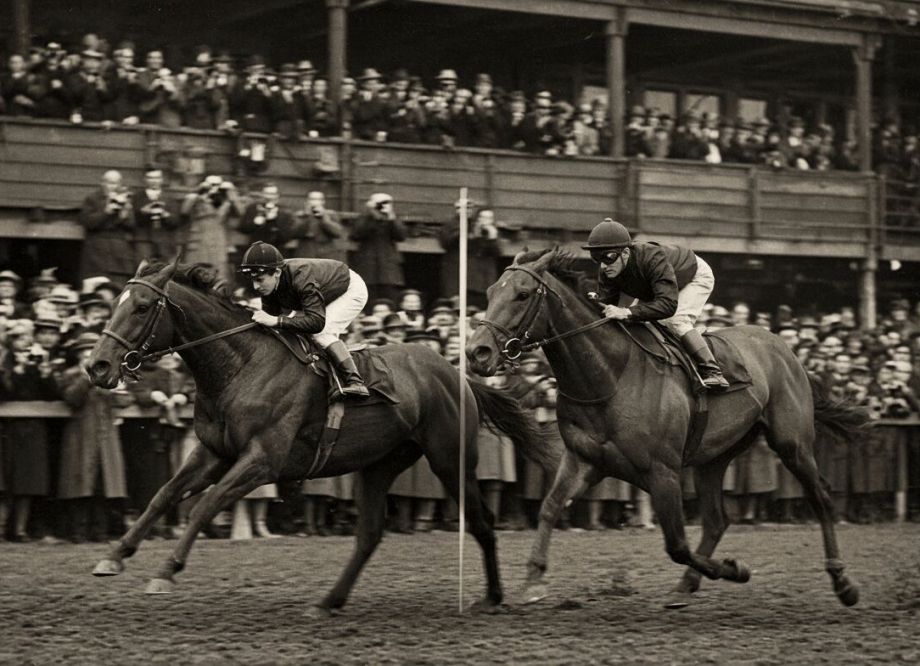
The press gallery has already called the Greens a roughie. In 1948 a camera at Flemington had something to say about that.
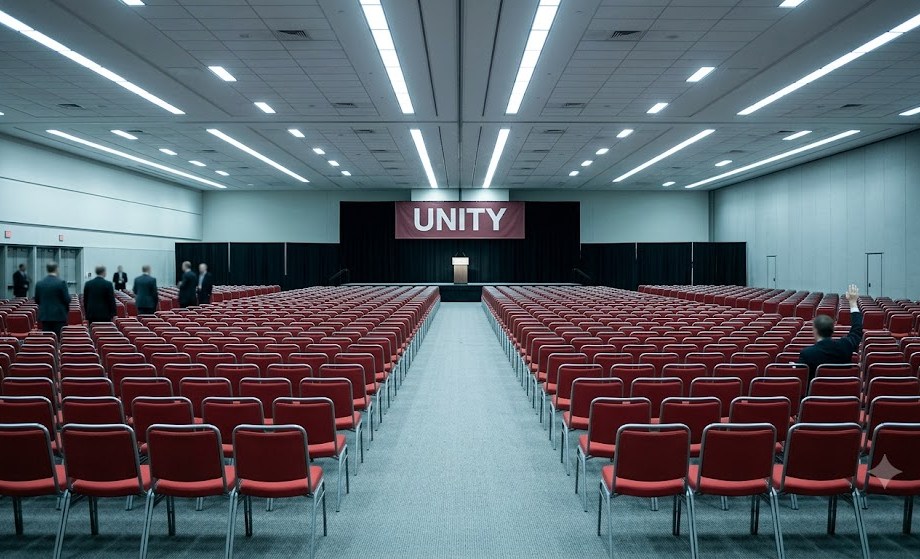
Bryan Dawe interviews a senior Labor figure about the smoothest national conference in decades — three days, one open debate, and not a face in the room. A tribute in the spirit of Clarke and Dawe.
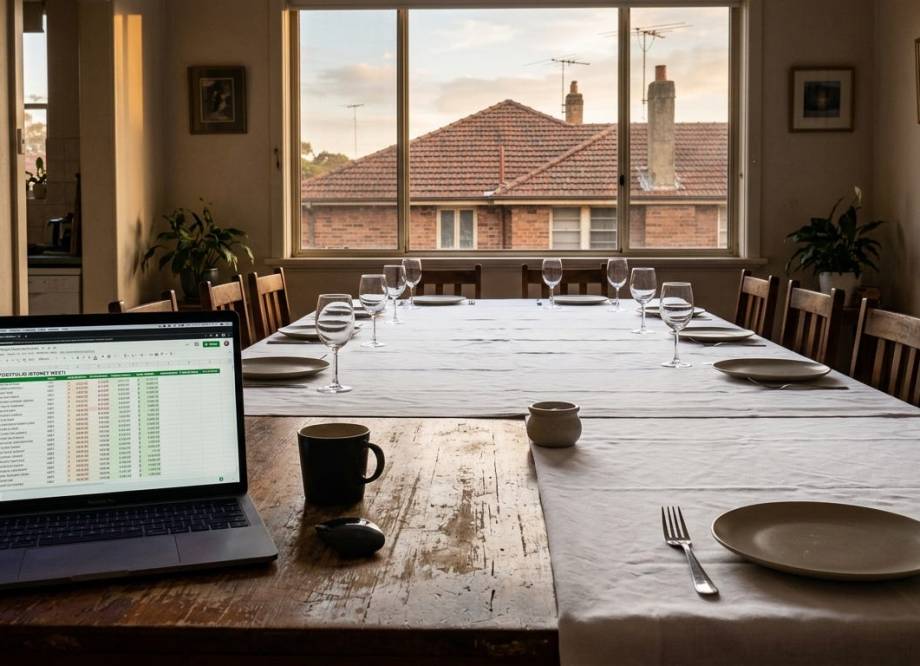
Anthony Norman Albanese crossed Parramatta Road the way other people cross a street: with the calm and conviction of someone who has rehearsed the gesture for television. He came from a housing commission island ringed by depots and the click-clack of Catholic rosary beads, black as anthracite and polished to a gloss by the unrelenting petitions of the poor but faithful. He was, as the campaign line put it, a son of a single mum. It was also an opening line with longer ambitions.
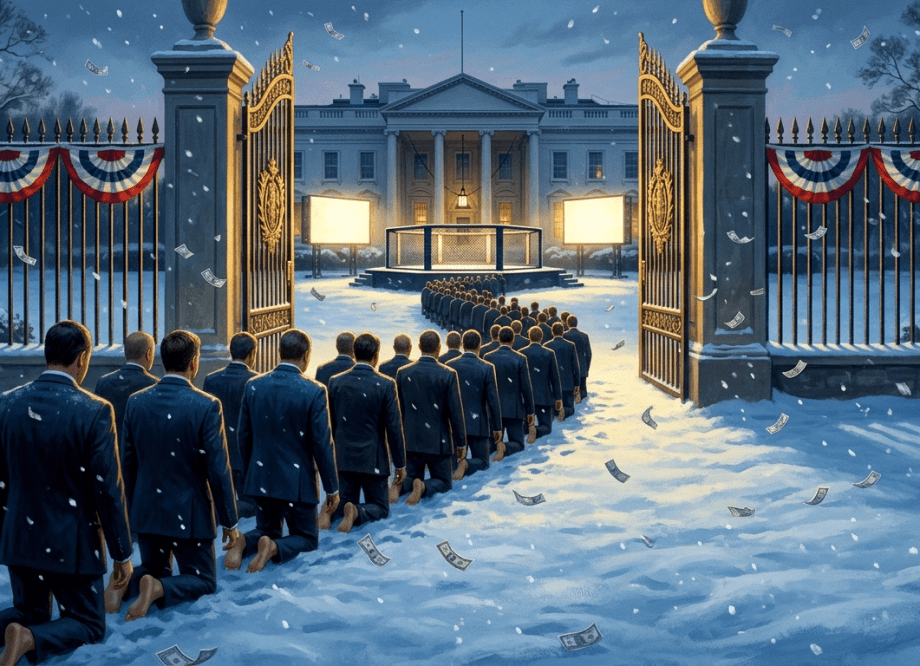
In 1077 a king knelt three days in the snow at Canossa, and it worked. Nine and a half centuries on, the pope-king turns eighty behind a cage on the South Lawn while the pretenders queue: a trillionaire, a Crown Prince, and a deputy sheriff paying by direct debit. Urban Wronski on the new Investiture Controversy.
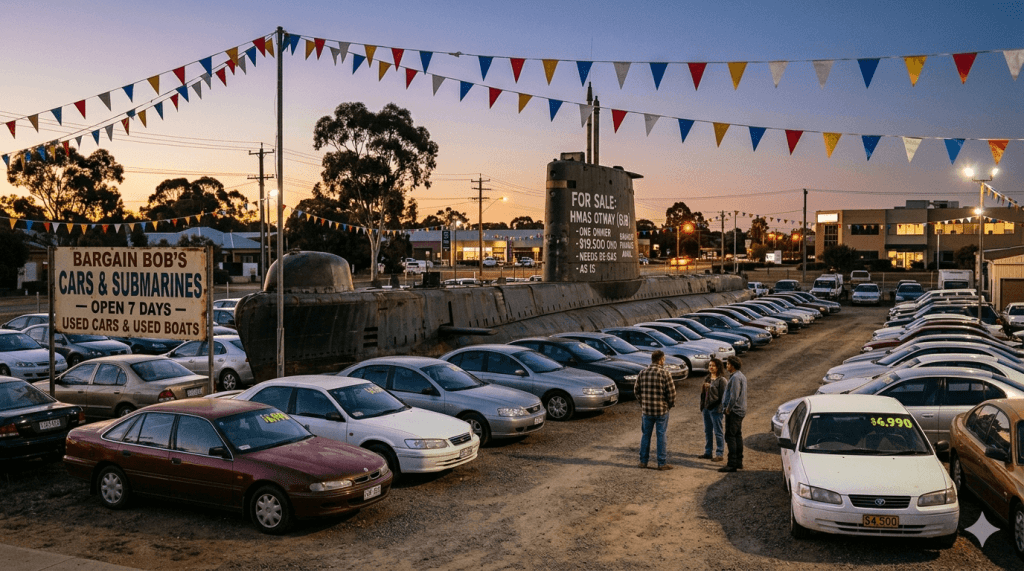
The interview never happened. It should have. John Clarke died in 2017, and the genre died with him: the po-faced minister, the patient interrogator, the absurdity delivered in the flat tones of a man explaining a routine procurement. So here is the sketch he might have written, had he lived to watch us buy three used submarines and call it a defence strategy.
The set is two chairs and a desk. We join them mid-interview.
DAWE: Minister, under the original deal Australia was to receive three submarines. Two second-hand, one brand new.
CLARKE: The new one was the exciting one.
DAWE: And now?
CLARKE: Three submarines, Bryan. The number remains unchanged.
DAWE: But the new one has gone.
CLARKE: The new one has been streamlined.
DAWE: Into what?
CLARKE: Into an older one.
DAWE: So all three are now second-hand.
CLARKE: All three are proven. We’ve placed a premium on simplicity. The brand-new one had never been to sea. We didn’t know it. These, we know everything about. We even know how old they are.
DAWE: How old are they?
CLARKE: Between six and fifteen years.
DAWE: The design life is thirty-three.
CLARKE: So someone’s taken care of the difficult early years. We’ve outsourced the running-in. The Americans have very kindly absorbed the depreciation.
DAWE: The country is paying an extraordinary amount of money.
CLARKE: You could buy a great many doughnuts, Bryan.
DAWE: We’re not buying doughnuts.
CLARKE: No, but it gives you a sense of scale. Warehouses of them. Fresh daily.
DAWE: For three used submarines.
CLARKE: One careful owner. Full service history.
DAWE: When do they arrive?
CLARKE: The first in 2032. And in the meantime, the jobs. That’s what nobody mentions.
DAWE: What jobs?
CLARKE: We have two hundred Australian tradespeople at Pearl Harbor. Skilled people. Working on the submarines.
DAWE: Our submarines.
CLARKE: The American ones.
DAWE: We’ve sent Australian workers to fix the US Navy’s submarines.
CLARKE: To increase their sea days. They’re behind, the poor beggars. Can’t build them fast enough. So we’re helping out.
DAWE: While we wait for ours.
CLARKE: While we wait. It’s the alliance, Bryan. You give a little.
DAWE: We’re paying an enormous sum and supplying labour to build the boats the seller hasn’t finished.
CLARKE: When you put it like that it sounds transactional. This is a friendship. You don’t keep score.
DAWE: Minister, are we any safer?
CLARKE: They’re perfectly safe, Bryan.
DAWE: Safe from what?
CLARKE: From the threat.
DAWE: Which threat?
CLARKE: The one we don’t name. You don’t name it. That’s the whole point of it.
DAWE: But you’ve costed it. You’ve sent two hundred tradesmen to Hawaii over it.
CLARKE: We’ve had to be prudent.
DAWE: About a country you won’t name.
CLARKE: Our largest trading partner, Bryan. You don’t insult a customer.
DAWE: So we’re defending ourselves against the people we sell the iron ore to.
CLARKE: We sell them the iron ore. They sell us the anxiety. It’s a very balanced relationship.
DAWE: And the submarines arrive when?
CLARKE: The first in 2032. The Australian-built ones in the 2040s.
DAWE: Until then?
CLARKE: You’ll always know where they are.
DAWE: Thank you for your time.
A note to readers: this, invented interview is a tribute to the comic genius of John Clarke and Bryan Dawe, their remarkable craft and timing and an act of homage to a tradition of satire that is razor-sharp and yet utterly minimalist. Pared to the essentials. Two chairs, a desk, rather than any set and the truth said plainly enough to be unbearable. There is no greater compliment.
A very close cousin to this text also currently appears in The AIMN under, “Underwater Matters: AUKUS and the Art of the Used Submarine.”
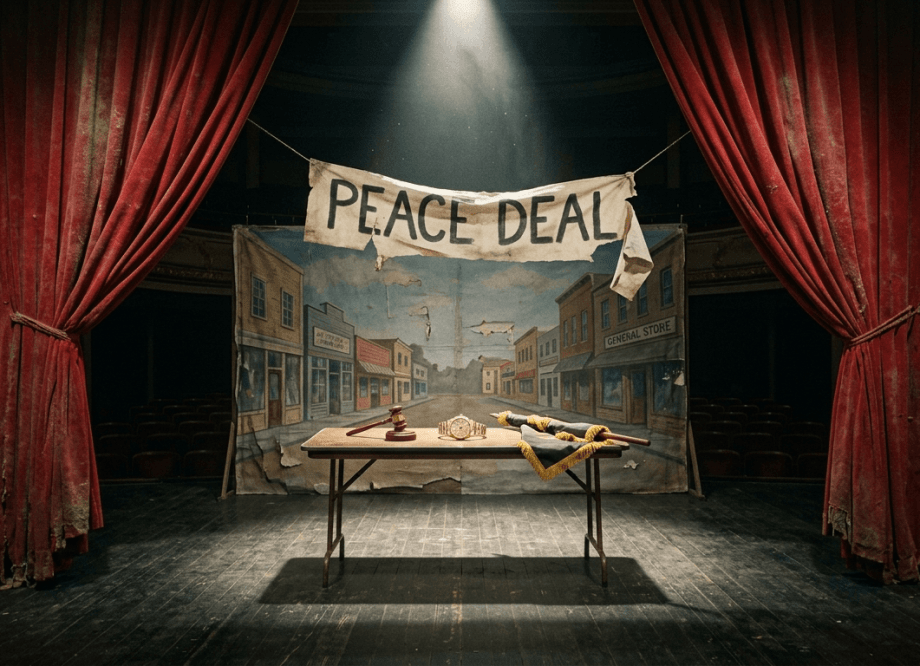
Trump killed Truth, Justice and the American Way. The same announcement-as-product racket just sold Australia three second-hand submarines and called it a triumph.
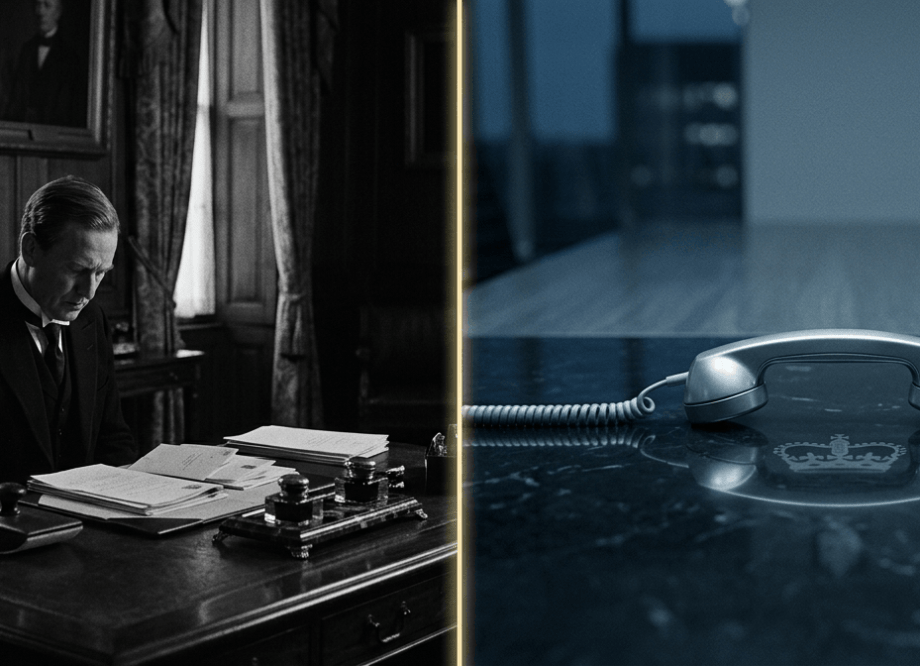
The Palace knew about Kerr’s plan to dismiss Whitlam. Whitlam did not. Fifty-one years later, the same Crown is phoning the American president to sell AUKUS. Urban Wronski on the loyalty that never changed.
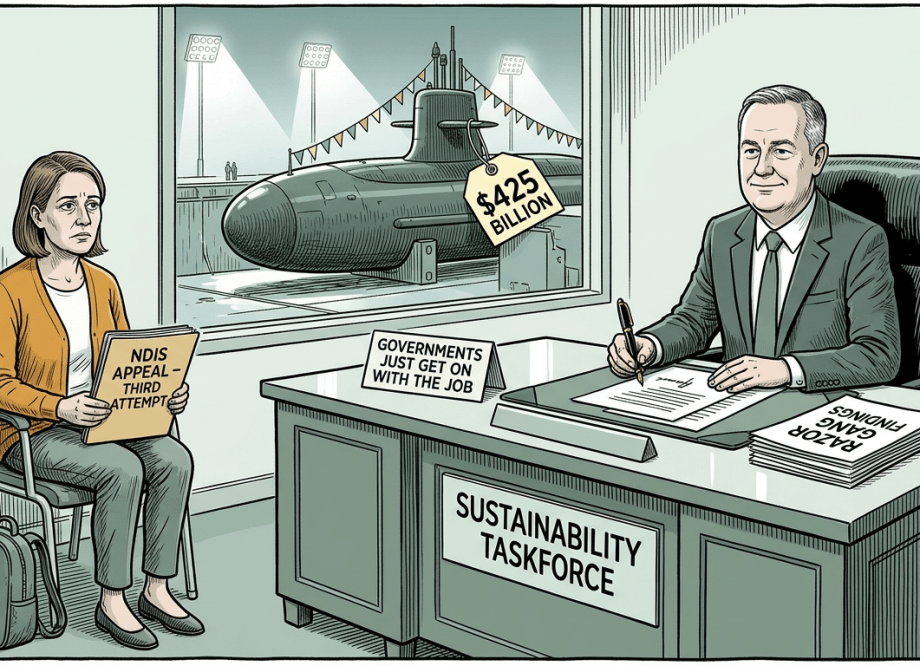
Lisa Goodwin’s twins are autistic. She applied three times, fought for years,
and when Labor announced its latest cuts she called it “a betrayal.” Urban
Wronski on Mark Butler’s razor gang, the $425 billion submarine program eating
the fiscal space disabled children once occupied, the algorithm that replaces
human judgment, and the shearing sheds that would not recognise the party
that grew from them.
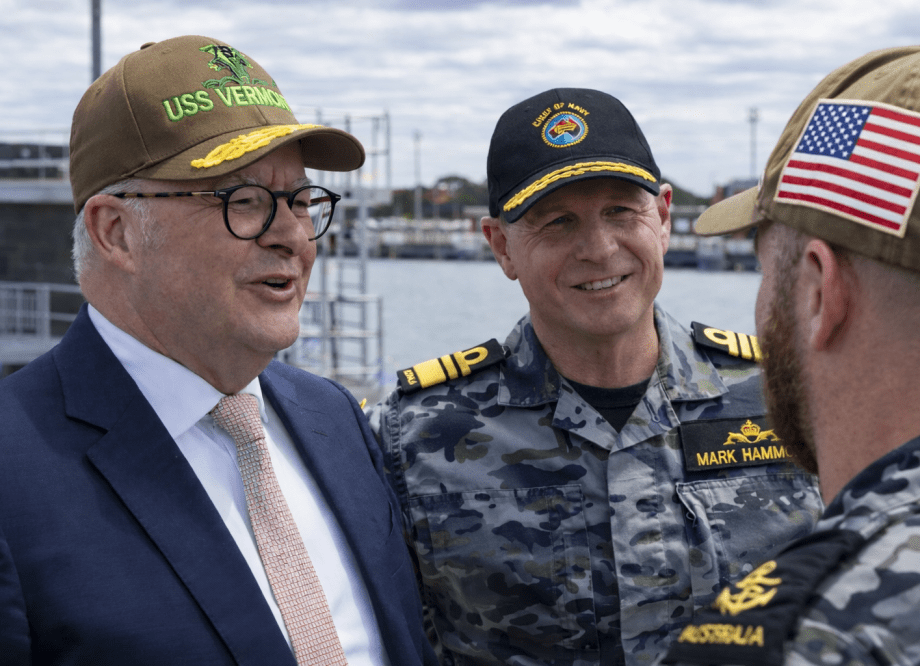
Albanese grins in his USS Vermont cap. Hammond smiles in his Chief of Navy lid. The submariners have taken the wheel of Australian defence — $368 billion, phantom crews, obsolete technology, and a slow bicycle ride to yesterday’s wars. Urban Wronski on how Labor completed its capture by Uncle Sam. With a little help from Clarke and Dawe.
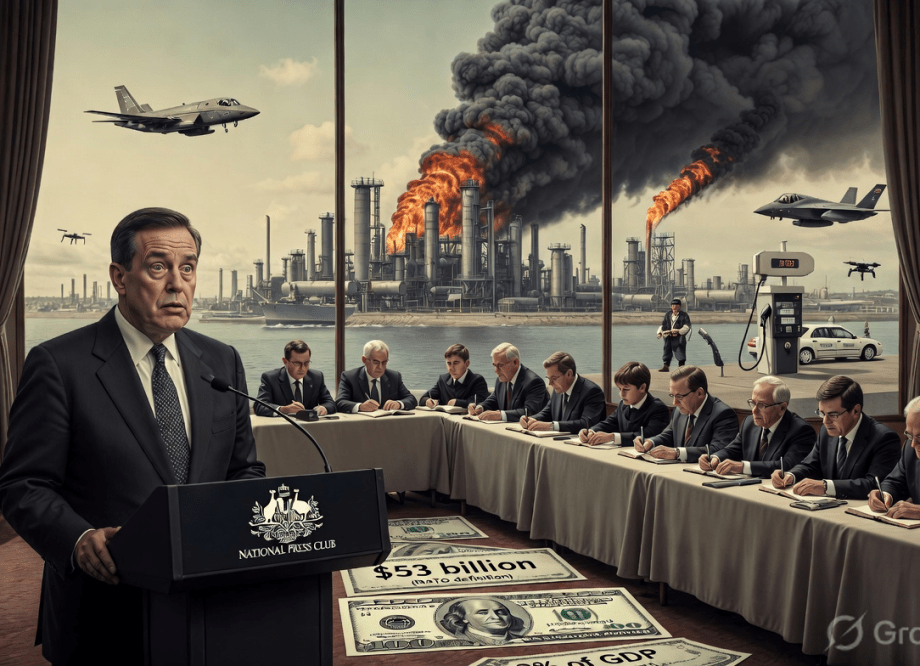
Defence Minister Richard Marles announces Australia’s largest peacetime defence spending hike while the Geelong refinery burns and fuel reserves hit five weeks. A deadpan account of spending better, NATO accounting, and submarines arriving in the 2040s.
Once a week, I share one poem with commentary and insights.
Society, politics, economics, education, population, immigration and demography
Your source for what's trending in the news!
davidtylerpoet
Exclusives | Investigations | News
Sometimes Uncomfortable Reading but…
A topnotch WordPress.com site
An exploration of the hazardous objects and features found in the Victorian home
Psychology & Psychoanalysis in the 21st Century
Musings from home and hearth
Adding my voice to Australian Politics
New, fearless, fresh and original Australian political comment, satire and more.
Political Enthusiasts, Proud ALP & PM Julia Gillard supporters! Dislike media bias. Hate racism, injustice and lies.
Real News - New News - Independent News
This WordPress.com site is the bee's knees
The AIMN is an online platform that provides a space for citizen and public interest journalists to engage in and contribute to independent media, focusing on politics, democracy, environment, and identity.
A topnotch WordPress.com site
SIT DOWN, HAVE A DRINK, RELAX.

