Why Operation Epic Fury is Burning Down without Burning Out
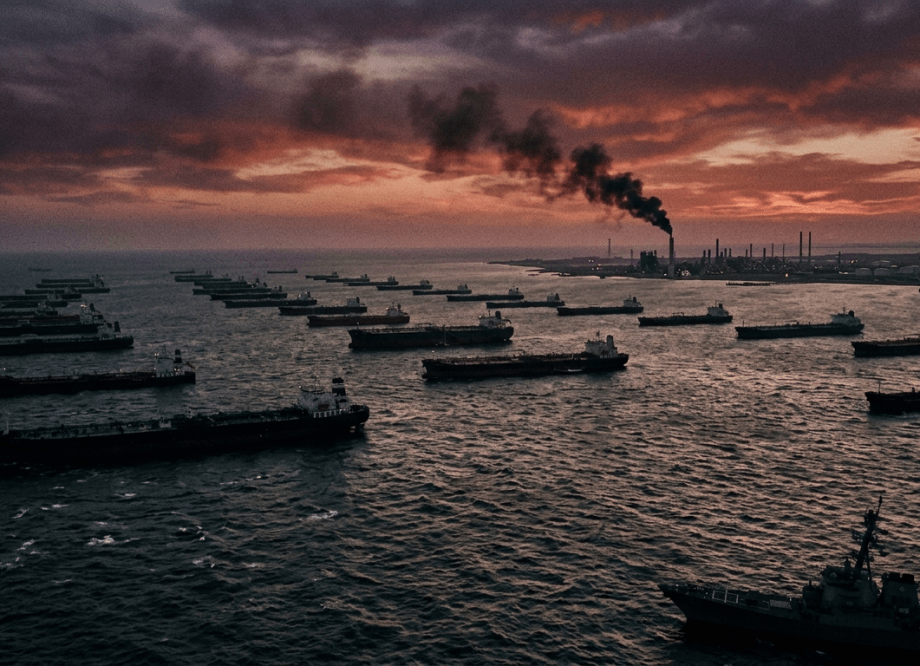
Thirty-two days into this firestorm, the grim ledger grows heavier by the hour. Thirteen U.S. service members now rest in flag-draped coffins at Dover Air Force Base, their deaths a stark counterpoint to every vow of surgical precision and swift resolution. Brent crude has rocketed past $115 a barrel. Nearly two thousand ships, hulking supertankers among them, skulk on either flank of the Strait of Hormuz, engines humming in futile readiness, permitted only selective passage under the shadow of Iranian mines and missile batteries. Insurance underwriters are scrambling, premiums spiking as the world’s principal energy artery throbs with undisguised peril. Iran, battered yet unbowed, has not merely survived the onslaught. It has struck back with a tenacity and rational calculation that defies every assumption on which this war was built.
From the digital ramparts of Truth Social, President Trump unleashes threats of “Death, Fire, and Fury,” painting Iran as a regime ripe for collapse. Tehran refuses the cue. What was billed as a blitzkrieg, a lightning campaign of overwhelming dominance has morphed into something far more intractable: a protracted contest in which raw firepower meets the unyielding arithmetic of endurance, and endurance, on current evidence, is winning.
The Scoreboard Nobody in Washington Wants to Read
Open-source intelligence lays bare the ferocity on both sides. In the war’s opening salvos, Iran fired approximately 420 missiles across nine countries and maritime targets: 162 aimed at Israel, 167 hammering the UAE, 46 pounding Qatar. Over the first five days alone, more than 90 strikes targeted Israeli soil, with roughly 20 breaching civilian defences to claim at least ten lives; a toll surpassing sixty percent of the entire Iranian barrage from June’s twelve-day war. The horror crystallised in Beit Shemesh, where nine civilians died in a synagogue shelter. In Tel Aviv, a missile tore through a residential block, killing one and wounding dozens after air raid sirens choked into silence.
Iranian missiles landed within twenty kilometres of Dimona, Israel’s nuclear reactor, inflicting over 180 casualties in those strikes alone. Iranian forces crippled the Orot Rabin power station near Hadera, which furnishes between twenty and twenty-five percent of Israel’s national grid. CENTCOM confirms thirteen American deaths and hundreds wounded, the bulk from sustained assaults on Prince Sultan Air Base in Saudi Arabia. Meanwhile, satellite imagery quietly dismantles the triumphalist briefings: Kharg Island, declared “totally demolished” by U.S. spokespeople, still hosts tankers moored and loading. Reality has a way of surviving press conferences.
The War That Wouldn’t End on Schedule
Operation Epic Fury launched with the thunder of stealth bombers and precision munitions, promising a decisive blow. Instead it has settled into stalemate, not of Hollywood heroics but of grinding attrition, a domain for which Iran has been preparing for twenty years. Planners anticipated Tehran’s surrender within days. Reality delivered a decentralised command structure that weathers the storm and retaliates against oil infrastructure and American outposts with unnerving coordination.
“We took a little excursion,” Trump reflected on March 9, framing the venture as a brief purge of “evil.” The excursion lingers. Decapitation strikes claimed Ayatollah Khamenei and swathes of the Iranian elite, yet the Islamic Republic’s foundations held. Seven B-2 Spirit bombers made the crossing from Whiteman Air Force Base in Missouri, unleashing GBU-57 Massive Ordnance Penetrators, thirty-thousand-pound behemoths, against Fordow, entombed eighty to ninety metres beneath unyielding limestone and dolomite, well beyond the bombs’ rated penetration depth. F-22s and F-35Cs swept ahead on suppression missions. Thirty Tomahawks streaked from the USS Georgia in the Gulf of Oman. Israel synchronised strikes on Tehran, Isfahan, Tabriz, Mashhad, Shiraz, Bandar Abbas, and Kermanshah. CENTCOM touted a thousand targets neutralised in the first twenty-four hours. Iran’s answer: strikes on twenty-seven U.S. bases, refineries ablaze from Bahrain to the UAE, and mines choking the Hormuz approaches.
By March 9, Mojtaba Khamenei, harder-edged than his father, had ascended as Supreme Leader, rallying the Revolutionary Guard Corps into a tighter fist. The missiles kept flying.
What Victory Is Supposed to Look Like
To grasp the impasse, define the objectives. Washington’s stated aims focus on obliterating Iran’s missile stockpiles, production facilities, naval assets, and security apparatus; regime change quietly shelved in favour of “targeted degradation,” which is Washington’s way of admitting the original ambition was fantasy. Tehran, by contrast, pursues survival, deterrence through pain, and economic strangulation via Hormuz disruptions and strikes on Gulf partners. Neither objective yields easily to airpower alone. Ground escalation looms as the supposed solution. It demands allies. The allies are not coming.
God’s Own Stalemate
Beneath the tactical ledger simmers a deeper rot: a leadership that has infused this war with apocalyptic zeal and called it strategy. Defence Secretary Pete Hegseth, tattooed with a Jerusalem cross, forged in Fox News’ green rooms, sponsor of Pentagon prayer services that would embarrass a medieval bishop, has reframed Iran’s defeat as divine mandate. Non-commissioned officers have told their charges that this conflict fulfils “God’s plan,” with Trump cast as Jesus-anointed harbinger of the end times. Over two hundred such complaints have surged across fifty installations, according to the Military Religious Freedom Foundation. Hegseth has prayed aloud for “overwhelming violence” in the name of the Prince of Peace, a fusion of crusade and command in which prophecy eclipses professionalism and operational prudence becomes potential heresy.
The Mutiny That Dare Not Speak Its Name
“We negotiate with bombs,” the Secretary smirks, a declaration that betrays an alarming contempt for the very profession he nominally commands, and for the thirteen flag-draped coffins that have already made the journey home to Dover.
The professional military does not miss the distinction. It has spent two hundred and fifty years building an institution accountable to the Constitution, to the laws of armed conflict, to the hard-won doctrine that separates a disciplined force from a mob with aircraft carriers. Hegseth has spent fourteen months dismantling that accountability with a jackhammer and a prayer book, substituting political fealty for professional judgement, replacing rules of engagement with the Book of Revelation, and inviting a Christian nationalist pastor who believes women should not vote to lead worship services in the Pentagon auditorium.
Within the ranks, unease coalesces into action. Conscientious objector inquiries have erupted; a staggering 1,000% increase per the Center on Conscience and War, overwhelming the GI Rights Hotline with unprecedented volume. These are not faint-hearts but patriots bound by oath to the Constitution, not to revelation’s fevered script. Public sentiment mirrors the fracture: Pew polling registers 59% of Americans now viewing the war as a profound mistake, eroding the domestic reservoir for prolongation. Joint Chiefs Chairman General Dan Caine delivers briefings with the steady gravitas of a career soldier. Hegseth postures otherwise.
When the gap between the man at the podium and the men and women in the field becomes that wide, the institution does not break all at once. It bleeds quietly. Careers go unlived. Expertise walks out the door in civilian clothes. And conscientious objector applications pile up on desks across fifty installations; each one a small, formal, legally protected act of institutional self-defence. A soldier’s way of saying: this is not the oath I swore, and you are not the commander I owe it to.
History will recognise what Clausewitz understood and Hegseth cannot: that war prosecuted without rational political purpose, without professional discipline, and without the legitimacy conferred by law and allies is not war at all. It is organised recklessness; expensive, bloody, and in the end its own undoing.
The Mosaic That Won’t Shatter
Iran fights as if war were a marathon of collective will, not a duel of arsenals. No centralised pyramid vulnerable to a single decisive strike, instead a mosaic of distributed leadership: shatter one tile and the image coheres. Four weeks under relentless assault, its navy degraded, commands decimated, infrastructure scarred, and it still mounts synchronised attrition campaigns, severing oil lifelines and igniting logistics nodes across the region. Even the Minab school strike, 165 young lives extinguished, forged not fracture but furious national unity.
There is nothing like being bombed by people who believe God commanded them to do it for cementing resolve.
The Ground Invasion Fantasy
Into this reality strides the Pentagon’s next brainwave: ground operations. Trump muses about seizing Kharg Island as casually as reclaiming a wayward snag at a backyard barbie. Raid plans and coastal incursions leak into the press. Iran’s doctrine awaits them; dug-in defences, terrain turned to kill zones, and a population that has just watched its schoolgirls bombed in the name of Jesus. Who fills the coalition ranks? China demurs. Europe sues for distance. NATO wavers. Gulf states, smarting from direct hits on their own refineries, are quietly recalibrating their enthusiasm. A ground operation demands vast logistics, staging grounds, and the kind of international legitimacy that burns to nothing when your Defence Secretary declares the war a biblical prophecy.
The Arithmetic of Endurance
Airpower alone rarely crowns victors, as Russia’s Ukrainian slog attests, and now reaffirms in Persian. Billions vanish in weeks. Hegseth is eyeing $200 billion more from a Congress with no timeframe offered and no exit visible. Iran cradles capabilities yet unloosed, a veiled arsenal calibrated to prolong the bleed precisely long enough for American political will to crack. Both sides wield a veto over decisive victory. Neither can impose a settlement. This is managed failure dressed in the rhetoric of triumph.
The Peace That Dare Not Speak Its Name
What unravels this knot? Not deeper bombardment. Not invasion’s mirage. Not the fervour of Pentagon prayer. Pakistan is said to be mediating. Turkey and Egypt are working the phones in Islamabad. The diplomatic architecture for an off-ramp exists, fragile, contested, dependent on Trump’s attention span outlasting his ego. But using it requires admitting what is now obvious to everyone outside the Oval Office and the Pentagon chapel: that regime change, nuclear capitulation, and strategic submission are illusions under current means, with current leadership, and without the allies whose assistance was burned to cinders in the bonfire of Trump’s vanity.
Thirty-two days in, Operation Epic Fury has achieved something genuinely historic: it has made the world less safe, energy more expensive, American alliances more threadbare, Iran more unified, and the US military more fractured — all simultaneously, at extraordinary cost, in pursuit of objectives that drift and multiply with each press conference in which a Defence Secretary invokes Jesus Christ to justify the next bombing run.
In the Pentagon chapel, Pete Hegseth is praying for Armageddon. Across fifty military installations, American soldiers are filing conscientious objector applications. In the Strait of Hormuz, the tankers stay put.
The Lord, it turns out, has not yet got back to anyone with a plan of attack.


One thought on “Persian Stalemate”
Comments are closed.