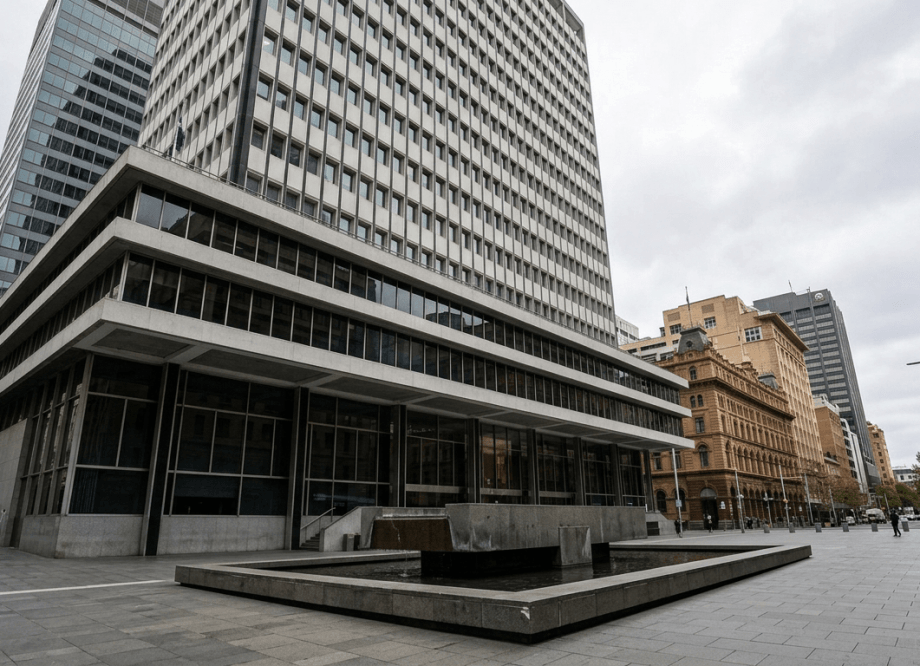
Michele Bullock reaches for the only lever anyone can find in Martin Place. Jim Chalmers blames the alignment of Saturn. And Julie Bishop departs the Australian National University, leaving behind $150,000 in travel expenses, an $185,860 Davos expedition, an $800,000 Perth office, and two very lonely sentences about environmental standards. Urban Wronski continues his weekly roundup.
The Reserve Bank lifted interest rates this week. “Lucky” Jim Chalmers was happy as a sandboy. He was, if anything, a little too pleased, the controlled smile of a man who has been waiting a long time for something to go right. Trying not to look like he’s celebrating prematurely at a funeral.
The Treasurer has spent the better part of three years explaining that inflation is global, that the causes were supply-chain disruptions and pandemic-era spending and the war in Ukraine and the energy transition and the peculiarities of the Australian housing market and several other things that were, he wished to make absolutely clear, not his fault.
He was not wrong about this. He was also not entirely right. The inflation that hit Australian households was partly global in origin and partly the result of domestic policy choices made by governments of all persuasions over several decades. The energy policy is running as rough as a bag of arseholes, the great Australian gas-pricing paradox, in which a continent sitting on some of the world’s largest gas reserves pays some of the world’s highest gas prices, did not arrive by accident.
But Chalmers takes the rate cut as vindication. Yes! Pumps the air. Not. The narrative has been massaged into shape: Labor inherited a mess, steadied the ship, the RBA has now endorsed the economic management. Skips the small-target policy. Whether the voters will read the same graph the same way is another question. Voters tend to experience economic policy through the price of their weekly groceries and the repayment on their mortgage, not through the RBA governor’s press conference.
Meanwhile the Labor Party, now the party of small targets, continues its ideological renovation with the quiet determination of a family that has decided to repaint the house without telling the neighbours it used to be a different colour entirely.
The re-badged HiLux? Labor 2.0 has retained the vehicle. It has changed the branding. The policies most likely to make a material difference to the lives of working-class Australians, on housing, on wages, on the casualisation of the workforce, on energy costs for low-income households, remain largely aspirational, hedged, means-tested into near-irrelevance, or quietly abandoned in the interests of fiscal responsibility.
It’s what you call it when you want to cut spending on poor people without saying that’s what you’re doing.
Saint Joe Hockey is back. Don Farrell continues his distinguished service as the man in the room when things are quietly agreed that it would be impolitic to announce. These two facts are not unrelated. The circles of Australian economic management are not large. The same faces recur. The same assumptions persist. The parameters of acceptable policy remain, with minor variation, what they have been since the late 1980s.
And then there is Julie Bishop, The Iron Butterfly who rose from the Dust at Wittenoom to Washington and beyond.
Julie Bishop’s career is a study in polished surfaces over toxic substrate: the woman everyone in Canberra could admire, while the dust she once helped manage in the files still kills in the lungs of the people her first clients were paid to ignore.
She rose without trace because that was the plan: not a roaring insurrectionist, but a silken deputy for a party that hates women who talk too loudly, who want too much, who won’t cosily play the “good girl” in the boys’ club. Her rise was not a breakthrough; it was a managed toleration—a woman the party could tart‑up in navy blazers and pearl‑clutching diplomacy so that no one else had to face the real demands of feminism.
And what had she done before the cameras? She cut her teeth in the corporate trenches, defending CSR in the Wittenoom asbestos disaster, where workers were dying of blue dust and the company’s lawyers, by every hostile account, were there to run the clock, narrow the causation, and delay the compensation. No one pretends she personally invented the mine, but she did refine the machinery that made sure victims waited longer, died poorer, and were never quite enough “proof” of corporate guilt. That is the kind of professional aristocracy she came from: a class that doesn’t break the law; it stretches it until the law breaks the people.
When she became the Right’s favourite trophy deputy, the same logic held. She was not there to remake the party; she was there to contain it—to give the public a woman with a voice, a smile, and a glossy CV, while the male hard‑core in the back rooms kept doing the dirty work of back‑stabbings, whisper‑campaigns, and the sociopathic architecture of the in‑group and the out‑group.
Here is the brutal truth Terry‑sales think tanks would never put in their PowerPoints: Bishop’s career is a neat case study in how the system can eat working‑class pain in the morning, burp liberal‑style feminism at lunch, and then lean on the same woman to perform moral credibility in the evening—all without changing a single structural sin.
So when you hear the bland Labor line about “women in politics” and “breaking barriers,” think of the Wittenoom widow reading a delayed cheque, and the former deputy in a power‑tie saying, with a tight smile, that she was “just doing her job.” That is the story here: one woman scrubbed clean for the cameras, and a whole line of others still buried in the dust.
Part Three of THAT WAS THE WEEK THAT WAS No. 1 will be published tomorrow.

