Category: Politics and Society

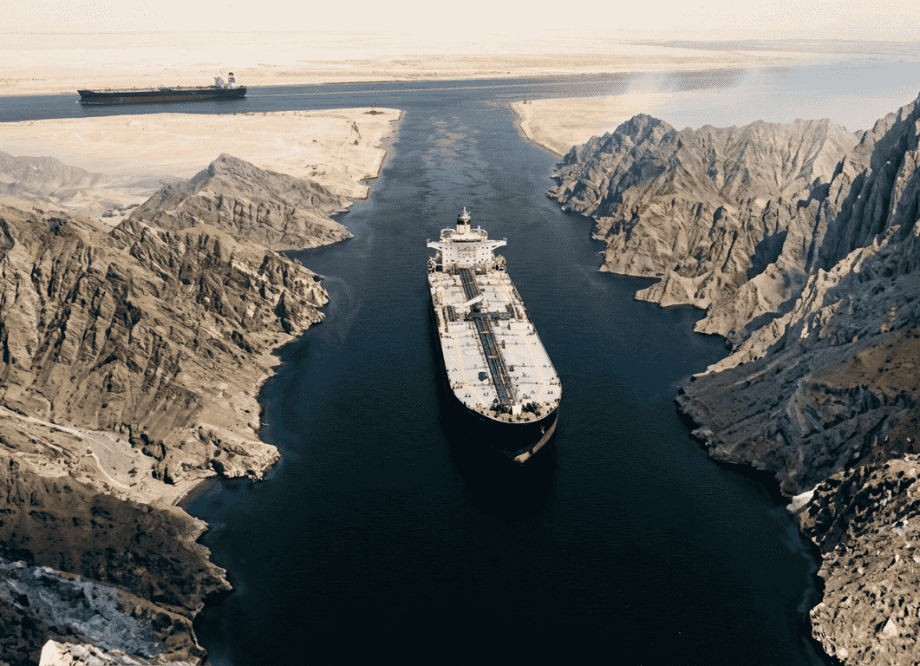
Editorial illustration depicting a fractured military command structure, symbolising the internal divisions within the Trump administration over Operation Epic Fury against Iran in 2026.

No Good Exit

Two weeks into Operation Epic Fury, the Trump administration has no exit strategy, no agreed objective, and a secretary of defence who believes God has a plan for the outcome. Inside the fractures, the contradictions, and the slow drift toward a quagmire nobody in Washington will name out loud. By Urban Wronski.

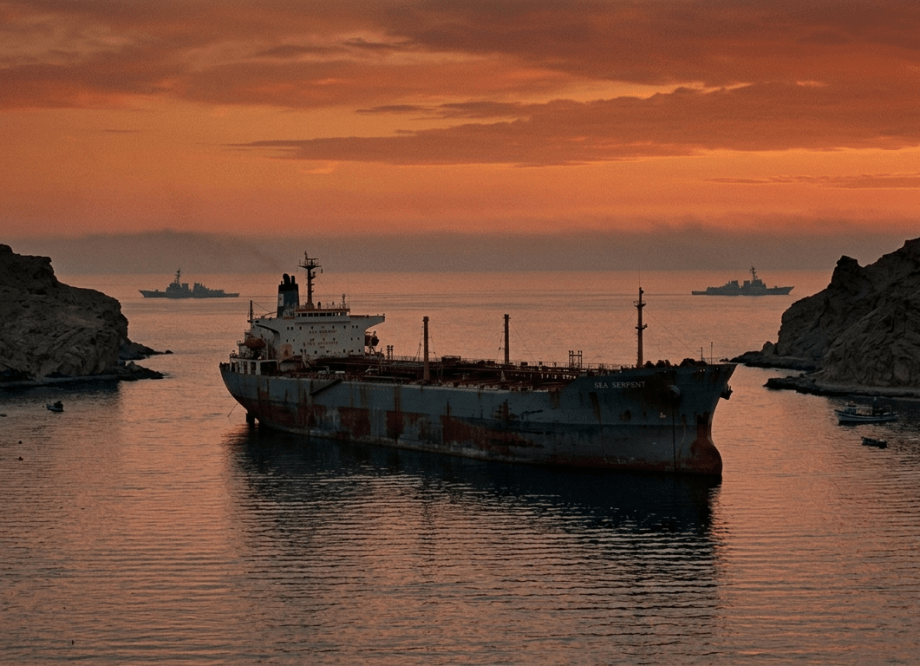
Satirical editorial cartoon showing a dancing monkey in a gold tie on a Middle East map, flanked by two organ grinder figures – one in a Western suit, one in Gulf robes holding a bone-saw. A burning oil tanker sits on dark water behind them. A dragon watches from above. A small applauding figure stands in the corner. Illustration in the style of George Grosz and Gerald Scarfe.

Don’t blame the organ-grinder; the monkey had a choice.

Trump didn’t stumble into the Iran disaster alone. Every catastrophe has its infrastructure – the courtiers, the flatterers, the transactionalists, the true believers, and the merely opportunistic who supplied the scaffolding. Bibi and MBS worked the organ grinders’ handles with professional dedication. But the monkey chose to dance. And in the corner, a daggy bloke from Cronulla was clapping.

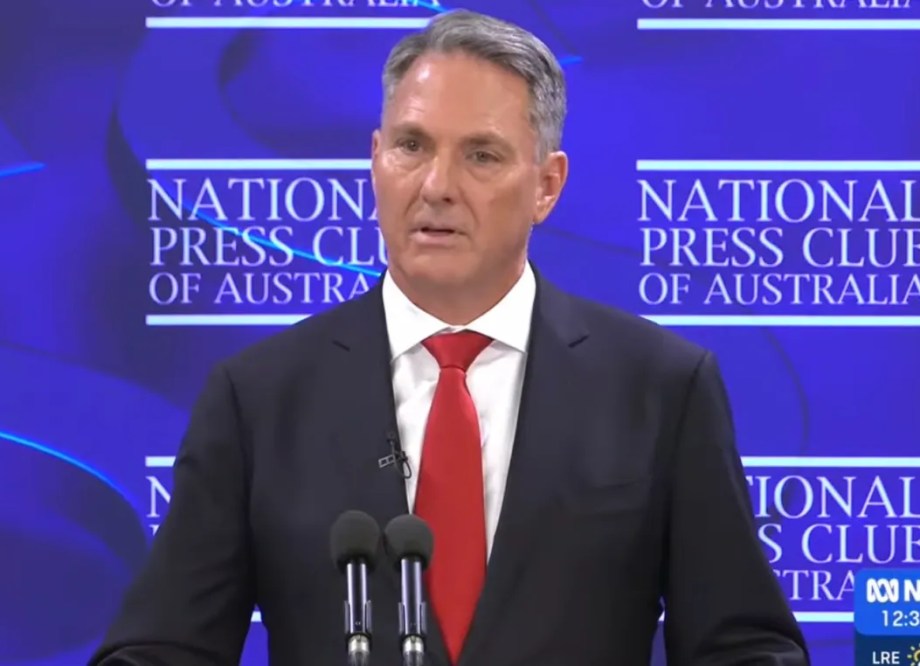
Editorial illustration of a knight in tarnished rusty armour standing at a press podium with an Australian flag, while a remote island detention centre is visible in shadow behind him.

The Photo-Op Refugee: Australia’s Selective Compassion

Australia granted asylum to six Iranian footballers this week and the ministerial photographs were impeccable. Behind them sits a detention archipelago that cost taxpayers four million dollars per person per year to maintain, a Witness K prosecution that criminalised truth-telling, and legislation introduced the same week to ban entry to entire nationalities without individual assessment. Urban Wronski looks behind the photo opportunity.

A cracked mirror lying in ash and rubble reflects a distorted television news broadcast showing a Middle East map and missile imagery, surrounded by torn newspaper pages and a broken press camera, symbolising the destruction of journalistic truth in wartime.

The First Casualty

They told you Iran’s missiles were being swatted from the sky. They told you the Iron Dome was holding, the Patriot batteries were working, US and Israeli air power was surgical and winning. They told you this on the ABC. They told you this on Sky.
They were telling you nonsense.
MIT Professor Ted Postol — the man who proved the Patriot missile failed in the Gulf War while presidents were claiming a 97 percent success rate — has now established that current intercept rates against Iranian missiles run at a few percent at most. The systems are depleting. The decoys are multiplying. The official story is, in his own carefully chosen word, a fraud.
The first casualty of war is truth. But the deeper insight, the one Phillip Knightley identified fifty years ago, is that the lies are not random. They serve purposes. And right now, they are serving purposes that Australians have every right to examine.

Satirical illustration of a chaotic war cabinet: an orange-tinted central figure gestures at a Middle East map while two suited advisers argue across a table strewn with classified folders. A pale isolated figure sits apart in shadow. A screen shows Tehran under attack. A Caribbean fishing boat is visible through the window.

Trump’s Team at War With Itself

There is a peculiar kind of drama playing out inside the Trump Bunker of the Bizarre. Its theme? The accidental Armageddon. A government so witless it could not run a bath has launched the most ambitious US military operation in living memory — and nobody in Team Trump can agree on why, for how long, or what winning looks like. Urban Wronski reports in two parts.

Silhouetted figures in a darkened war room study maps and screens showing Middle East strike targets, while a crumpled peace agreement lies on the floor below, a telephone receiver off the hook beside it

He Was Warned. He Knew. He Did It Anyway.

Trump was warned by Iran, by his own intelligence services, by international mediators and by members of his own Congress. The warnings were not vague — they were specific, on the record, and entirely accurate. Iran had agreed to a nuclear breakthrough the day before. Netanyahu lobbied for the strike. MBS made private phone calls urging it. US intelligence said there was no imminent threat. Trump attacked anyway. Now the region burns.

Empty presidential chair at an Oval Office conference table, briefing papers scattered, Middle East map on the wall.

When Donald Trump declares victory over Iran’s nuclear program, his own intelligence chiefs exchange glances. The IAEA knows otherwise. But in the mind of a man with frontotemporal dementia, facts are optional. This is the story of an empire on autopilot — steered by a president whose most dangerous weapon is his own deteriorating mind.

Shuttered shopfronts in a Middle Eastern bazaar at dusk with scattered leaflets on wet cobblestones and distant fire glow through tear gas haze.

The Arson Investigator: How Western sanctions built Iran’s bonfire; and now, the firebugs demand to lead the rescue

Every empire tells itself its mission is not to plunder and control but to educate and liberate. Edward Said wrote that about Iraq. It reads as though written yesterday, about Iran. New two-part series from Urban Wronski examining how Western sanctions engineered Iran’s economic collapse — and why the same powers now present themselves as liberators. Part 1: The Arson Investigator.