Category: Albanese government

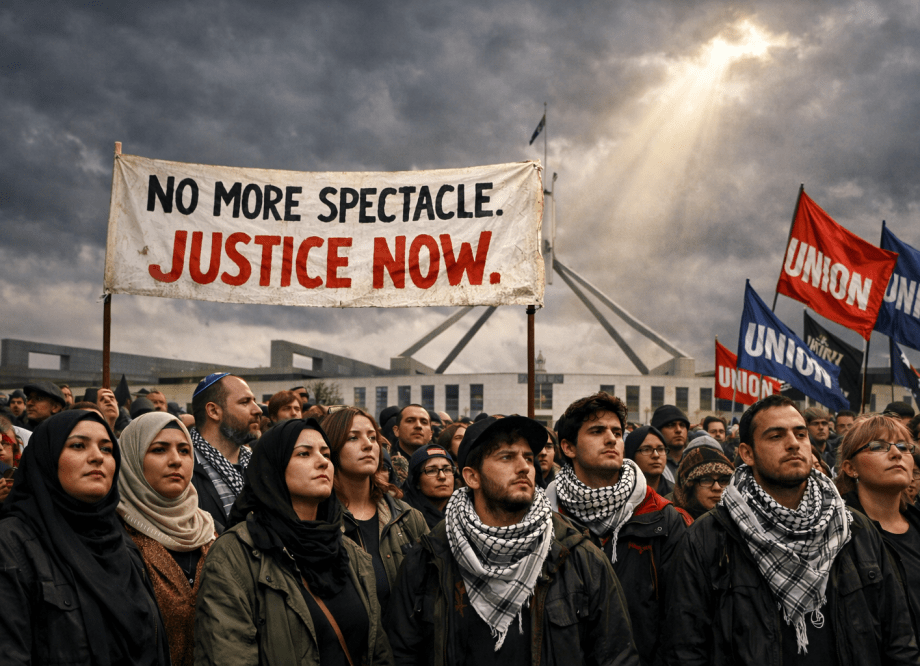
Diverse Australian protesters unite for justice outside Parliament House, holding a banner reading ‘NO MORE SPECTACLE. JUSTICE NOW,’ symbolizing cross-community solidarity against political inaction.

Labor’s Bondi Backflip: When Fear Trumps Justice

Anthony Albanese’s surrender to a Bondi Royal Commission reveals a political system that prioritises spectacle over justice. But as diverse communities unite to demand real accountability, the question isn’t whether Albanese folded—it’s whether Australia will let the powerful turn tragedy into theatre. A systemic analysis of fear, failure, and the fightback

When Antisemitism Becomes a Political Weapon

n the wake of Bondi, grief is being channelled into a dangerous misdiagnosis: that Jewish safety requires conflation, censorship, and punitive power. This essay argues for a public health approach to violent extremism, warns against collapsing Judaism into Israeli state policy, and shows how selective vigilance and entrenched Islamophobia undermine prevention and make everyone less safe.

AUKUS Caucus

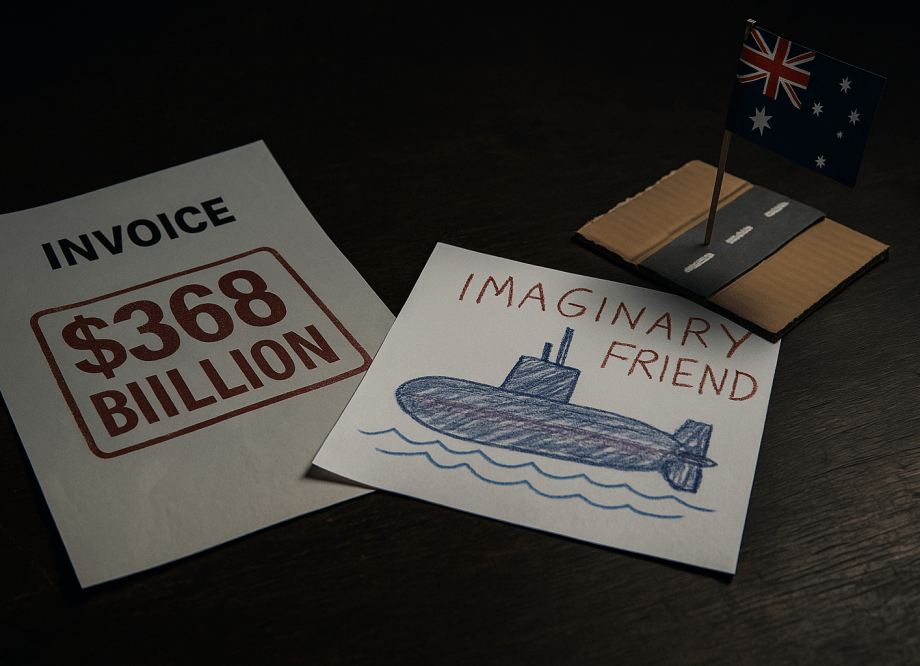
Australia has built a $368 billion cargo cult and called it strategy. The AUKUS Caucus offers money, bases and sovereignty in exchange for submarines that do not exist, built by shipyards that cannot deliver, on timelines that belong to fantasy. The only thing arriving on schedule is the bill.

Wronski’s News on Wednesday

Tuesday 10 December revealed Australian politics at its finest: banning teenagers from social media while spending $368 billion on submarines the UK admits it can’t build, from a country that’s already moved on diplomatically. Welcome to the Kingdom of the Unfalsifiable, where policy exists beyond verification, protected by the impenetrable forcefield of good intentions. As Richard Denniss observed, only a fabulously rich country could commit such sums without troubling Treasury or Parliament. We’re not battlers – we’re loaded enough to operate entirely in the realm of political fan fiction.

Part Four: “When ‘Historic Reform’ Means Managed Decline”

The final instalment: Did Labor’s environmental reform stop the degradation, or just slow it down enough to look serious while keeping the machinery of destruction functional? We measure the bill against Samuel’s recommendations, synthesise what every independent expert told us, and reveal the four-step pattern of how to manage environmental decline while calling it protection. This is policy capture in a democracy, not through corruption or conspiracy, but through the mundane mechanics of political calculation where industry interests outweigh both scientific advice and majority voter preference.