Every time the Liberals have touched the public health system in Victoria, they have done it by stealth, by timing, or by shifting the cost onto someone else, and the nurses and paramedics have been the ones who had to fight to reverse it. The pattern is not incompetence. It is design.
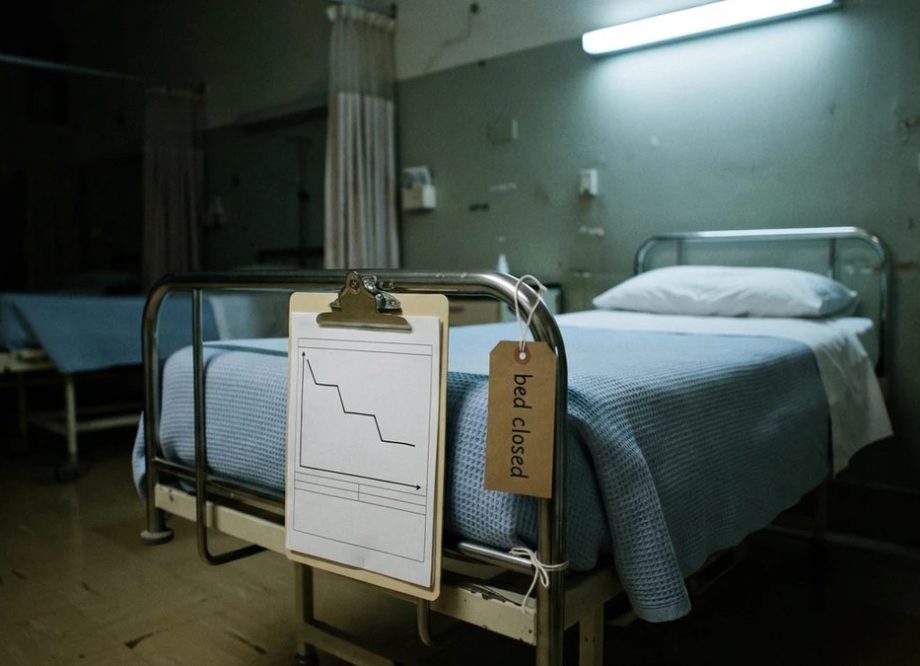
Nurses read the chart before they consult the patient. The patient says she feels fine. The chart says what her blood pressure did at three in the morning. A nurse I know, who picks up casual shifts at a small public nursing home out west, reckons a change would do Victoria good. Before Saturday, he might read the chart. So might the rest of us.
Start with Jeffrey Gibb Kennett, IPA centrefold pin-up and Scotch College Old Boy whose pal Lloyd Williams brought Crown Casino to town and who presided over the closing of schools, metropolitan hospitals and hospitals in the bush. Kennett’s government closed 350 government schools and cut 7,000 teaching jobs.
From 1992 to 1999, Victoria was Jeffed. Kennett’s government put Victoria’s public hospitals on a market footing and funded them through casemix, a formula that paid a set fee for each type of case. The quicker the discharge, the better the books.
By the end of the decade, the nurses’ union counted more than 1,300 vacant permanent nursing positions and 400 hospital beds closed on any given day. Fairfield, the infectious-diseases hospital that had carried Victoria through the AIDS years, shut its doors on 30 June 1996.
Kennett also sold the very idea of the public hospital itself. Latrobe Regional and Mildura Base were handed to private operators to treat public patients. It was a catastrophe. Bracks took Latrobe back. Mildura was the last to come home, over two decades later.
Enter Ted Baillieu, a man with the sound of money in his voice. In 2010 he said he’d stop the bleeding. He pledged to maintain nurse-to-patient ratios “in their current format” and to support them in current agreements. Within a year, the Sunday Age had the cabinet-in-confidence documents signed by his health minister, David Davis, outlining the real plan: replace nurses with cheaper health assistants, win “flexibility” on ratios, and save $104 million a year. Ten thousand nurses marched from Bourke Street to Spring Street. The government closed 1,516 hospital beds over the summer. Ted’s second cousin, Marshall Baillieu, gave the protesting nurses the finger. It took nine months to see the plan off.
It was hell for the paramedics. Their pay dispute with the Baillieu and Napthine governments dragged on for more than two years. They had not had a pay rise since 2011. On the dispute’s second anniversary they marched on Parliament chanting “Paramedics here to stay. Denis Napthine go away.”
Daniel Andrews sent their case to the Fair Work Commission within hours of being sworn in.
That is the history. Now the presenting complaint.
The IPA has been part of Jess Wilson’s political infrastructure for a decade. In 2016 its policy director, Simon Breheny, emailed Young Liberals to keep her as their president. She held on by six votes. Her husband, Aaron Lane, was an IPA legal fellow. That same year he wrote that public service perks “don’t pass the pub test”.
In May, Wilson announced a ten-year hiring freeze across the public service. It would come, she said, through natural attrition, with no cuts to police, nurses, teachers, health care workers, firefighters or other essential services. She said it would save $22 billion. On Thursday, with the costings finally released two days before the election, the figure became $23 billion over a decade.
The Australia Institute calculates that she would need to cut 31,700 jobs by 2036-37, close to half of a public service of 58,169. It calls the plan implausible. A Parliamentary Budget Office analysis, circulated by Labor, put the freeze’s saving at $8.5 billion over six years, well shy of what her surplus needs. Even The Nightly drew the obvious conclusion: a Wilson government would have to cut services or borrow more.
I spent much of my working life in state education. “Back office” is what you call a job the week before you cut it. The work doesn’t vanish. Someone still has to do it. In a hospital, that someone is the nurse on shift.
On Thursday 26 November, Wilson released Coalition figures only two days out from election day. Almost two million Victorians have already voted. The Liberal centrepiece is a $9.2 billion, 90-year lease of the two plants that treat Melbourne’s sewage.
She would sell our lavatory pans from under us. A 90-year lease is a sale with a longer name. Wilson swears the bills won’t change. Every Melbourne household already pays for sewerage on its water bill, through Greater Western, South East or Yarra Valley Water. So ask her two questions. Will a private owner’s prices still be set by the Essential Services Commission? And will the $9.2 billion it pays become part of the asset base it is allowed to earn a return on? Out in the bush, the regional water corporations are spared. So is the outback dunny, and the composting toilet in Fitzroy. Not every pan is for sale.
Melbourne built its sewers in the 1890s because Marvellous Smellbourne was dying of typhoid. Public health here, as elsewhere, began with the drains. A 90-year lease will outlast every voter in this election.
You can’t afford to get ill. Wilson has promised $1.27 billion to halve the elective surgery waitlist by paying private hospitals to operate on public patients. Under Jess you are Jeffed: public money, private theatres, and the same promise that nothing that matters will change.
And the ratios? Last election, the nurses’ union said the Coalition’s plan was “silent on committing to legislated nurse/midwife patient ratios.” Its deafening silence continues.
That silence matters most in the bush. Victoria’s ratio law covers public hospitals and public nursing homes, but in aged care, it’s open slather. Most aged care beds in this country are run by private and church operators, who need only an “adequate number” of staff. In the small public homes of country Victoria, the law still specifies how many nurses must be on the floor. Labor wrote the ratios into law in 2015, and a law is harder to shift than an enterprise agreement. But a law is only as safe as the numbers on the floor of the upper house. Ratios are in law; a lease is a contract. One can be amended in an afternoon in Spring Street. The other will outlive this parliament.
Wilson’s how-to-vote card places Labor, the Greens and the Victorian Socialists last. Every other party, including One Nation, is preferenced above them. In 2001, John Howard said One Nation should go last on every Liberal card in the country. That principle held for a quarter of a century. It has been numbered away in an afternoon.
If One Nation holds the balance of power in the upper house, every health law Wilson proposes will need its votes. So read that chart too. Is the state ready for Dr Pauline Hanson?
Medical experts say One Nation’s health policies are based on misconceptions and could leave vulnerable Australians without care. Nationally, it wants to “review” $3 billion of medicines added to the PBS during the pandemic, and to pull Australia out of the WHO. Its national website promises to “reduce the gestational limit for abortions,” while its Victorian campaign says it has no state abortion policy. It will not publish its costings at all.
Vote how you like. But the patient has been in before, and the chart is thick.
Read the chart, Victoria. Not the bedside manner.


One thought on “Read the Chart”