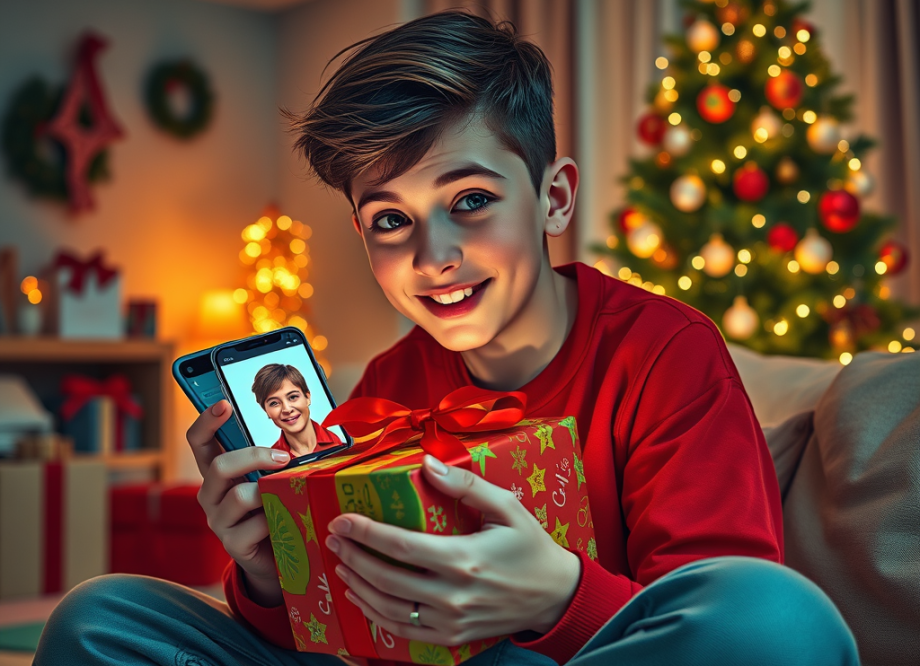
Christmas 2025, and Australia’s teenagers are busy unwrapping their presents: new VPNs, borrowed parental logins, and AI-generated profile photos that make them look fortysomething. Welcome to Labor’s world-first social media ban, two weeks old and already a monument to performative governance so spectacular it makes Scott Morrison’s Hawaiian holiday look like state of the art crisis management.
The Clayton’s social media ban was supposed to come into force December 10th with all the fanfare of a victory parade. Into farce, more like it. Sydney Harbour Bridge lit up in patriotic green and gold. Albanese hosted a barbecue. The family-friendly Murdoch firm came up with a ripper slogan. It’s plastered everywhere: “Let Them Be Kids.” The Prime Minister for announcing things, declared it “a proud day for Australia”, families “taking back power from big tech companies.” And he kept a straight face.
How’s that working out? For the kids? For Labor?
Within 24 hours, teens were back online. If they ever left it. you can’t leave. It’s in the software engineering. Imagine an exploit that can distract an entire generation from homework or helping Mum, while introducing them to the fun of punting online and teaming up with complete strangers.
Not on shadowy dark web forums. On the same bloody platforms. Using their parents’ faces for facial recognition. Creating accounts with birth years claiming they were born in 2000. Deploying $20-a-year VPNs that make SharkNet look like a bargain at twice the price of a family pizza.
One fifteen-year-old told CNN he’d lost his Snapchat account for exactly three hours before his mates were back, many using AI to generate middle-aged profile photos. “I think it’s because I put my birthdate in as the year 2000 when I first signed up,” he explained, his friends nodding. Clever lad.
Tech-savvy? These kids are getting a masterclass in subversion, along with digital deception, privacy evasion, and the reliable truth that government prohibitions are Pantalon theatre, not protection.
But here’s the genius move Labor doesn’t want you clocking: they’ve created the perfect storm of parental complacency. Mum and Dad think the government’s sorted it. Kids safe. Problem solved. Crack open another tinnie. Time to relax our vigilance because that caring Albanese government is on the case.
Except the kids haven’t vanished from social media. They’ve just learned to lie better. And they’re not migrating to safer spaces; they’re flash-mobbing on to platforms nobody’s even heard of. Yope, Coverstar, Lemon8, ReelShort. And guess what. Yope and Coverstar are either untested or Chinese-owned streaming services with their own take on privacy.
The eSafety Commissioner now faces an endless game of regulatory whack-a-mole, chasing teens who are three steps ahead and finding communities with less moderation, less transparency, and potentially more danger than the platforms we actually think we know something about. Just ask the kids.
Professor Daniel Angus from Queensland University of Technology nailed it: “We’ve essentially pushed all the kids off [the major platforms] and so missed an opportunity to actually regulate them.”
The delicious irony? In the same fortnight this “protective” legislation came into force, over 150 teenagers used social media to organize a mass shoplifting raid on a supermarket. Coordinated. Executed. How cool is that? All while supposedly being “protected” from the dangers of online connectivity.
THE MINISTER IN HIDING
Speaking of protection, let’s talk about the minister who should be doing a victory lap. Communications and Sports Minister Anika Wells, was one of the architects of this legislative triumph which even boasts a dynamic Dave Coleman, brainwave – a 2023 Coalition private member’s bill in its pedigree.
But it’s her baby. Wells should be on breakfast television, explaining how brilliantly it’s working, how teens are suddenly reading books, playing outdoors, going to Church and helping old ladies to cross the road.
Instead, she’s in witness protection.
Wells has spent the past two weeks fending off accusations she rorted travel allowances to the tune of nearly $100,000, flying herself to New York for “urgent consultations” about teen social media safety, and separately billing taxpayers for flying her husband to grand finals, the Australian Open, and a family ski trip while claiming “family reunion” entitlements.
The timing is exquisite. Just as Wells should be spruiking the success of her ban, she’s busy as a cat watching two rat-holes, self-referring to the Independent Parliamentary Expenses Authority and avoiding cameras like a teenager dodging age verification.
Attorney-General Michelle Rowland, who held the Communications portfolio before Wells and is said to have done some of the legwork for this spectacular reform has also been forced to repay $10,000 of the $21,685 she charged taxpayers for a family holiday in Perth in 2023. Ten official engagements, she insists. Though apparently not on every day of the week-long trip.
Both ministers did the right thing, we’re told. Self-referred. Made repayments. All very above-board.
Except it’s an own goal: these are the same ministers responsible for a policy that just taught every teenager in Australia that rules are suggestions, that tech companies self-regulate, that privacy invasion is normal, and that adults will believe any show of compliance if you make it look official enough.
The kids are learning fast.
WHAT THE BAN ACTUALLY DOES
Let’s be clear about what the modestly entitled Online Safety Amendment doesn’t do. It doesn’t regulate algorithmic manipulation. It doesn’t stop dopamine exploitation. It doesn’t address data harvesting. It doesn’t make platforms accountable for predatory design. It doesn’t invest in digital literacy.
What it does is shift responsibility for age verification onto the same tech platforms that spent two decades perfecting addiction algorithms. Meta, TikTok, Google; these companies are now incentivized to become better at profiling Australian children. They must collect biometric data, ID uploads, behavioral analytics to prove they took “reasonable steps” to comply.
Privacy advocates are screaming. Digital rights groups are suing in the High Court. The Australian Constitution doesn’t explicitly guarantee a broad “right to political opinion,” but the High Court has found an implied freedom of political communication, essential for representative democracy (Sections 7 & 24)
Civil liberties organisations, on the other hand, warn the new law normalizes mass surveillance. The Privacy Commissioner expressed “scepticism” bureaucrat-speak for “this is insane.”
Meanwhile, the platforms have discovered age verification is mostly theatre. Self-reporting. Basic IP checks. Methods teens circumvent in approximately seven seconds using tools they learned about on TikTok tutorials that are, naturally, still available if you just don’t log in.
The platforms won’t face the $49.5 million fines. They’ll point to their “reasonable steps”; steps that involve asking users “Are you 16?” and believing whatever answer gets typed in.
THE KIDS WHO ACTUALLY NEED IT
Here’s what Labor won’t discuss: some kids genuinely need social media.
Seventy percent of LGBTQ+ teens use these platforms to find supportive networks, escaping isolation in communities where they can’t safely be themselves. Regional kids, neurodivergent teens, young people with chronic illnesses. For these youngsters, social media isn’t entertainment, it’s lifeline.
One researcher from the University of Wisconsin notes that marginalized youth; those experiencing bullying, discrimination, family rejection, report higher mental health distress. For them, social media provides community, resources, peer support. Cutting them off doesn’t protect them. It abandons them.
Of course, Labor consulted youth mental health experts. But did it meaningfully involve the kids affected? Certainly, it failed to design exemptions for therapeutic use or harm reduction. Just a blanket ban, announced with maximum political theatre, minimum policy thought.
Thirty-four percent of teens get mental health information via social media. Support groups. Coping strategies. Peer connection. For hospitalized teens or those with rare diseases, these platforms maintain crucial friendships. But sure, let’s cut them off and assume they’ll just… read a book instead?
THE BONDI DISTRACTION
And then, right on cue, the slaughter of innocent civilians at Bondi Beach.
Fifteen people murdered. Unimaginable tragedy. Grief that demands respect, time, dignity.
Instead, we get Tony Abbott and Sussan Ley, the latter zealous about ministerial probity after her own 2016 expenses scandal, breaking land-speed records to weaponise grief and take political advantage. For the pair, it’s all Albanese’s fault. Too soft on immigration. Too tolerant of Palestine solidarity protests. Naturally, the answer is more security, more restrictions, more performative toughness.
Never mind the actual failures in threat assessment, gun licensing bureaucracy, or intervention systems. Never mind examining how violent extremism develops or what prevention actually requires.
Much easier to blame “woke” immigration policy and pro-Palestine demonstrators. Classic Australian political theatre: exploit tragedy, avoid complexity, blame minorities. Yet it’s ugly and unprecedented. There has up until December 2025, been a bipartisan approach to such events.
Amongst it’s many unfathomable social and personal costs, The Bondi massacre has now consumed oxygen that should be interrogating why Labor’s social media ban is failing in real time. Our Opposition leader must be aware of that. Yet even without the LNP’s vulgar, inappropriate, disrespectful and strident petty political opportunism, the reform is vulnerable to attack on the most basic level.
THE PROHIBITION THAT ISN’T
The most absurd detail is that this isn’t even technically a prohibition. Teens can still visit social media sites. Watch YouTube without logging in. Browse TikTok as guests. They just can’t have accounts.
- Unless they lie about their age.
- Or use a VPN.
- Or borrow Mum’s login.
- Or create an account using AI-generated photos.
- Or access any of the dozen platforms not yet on the eSafety Commissioner’s list.
Prohibition has a rich history of failure. Alcohol. Drugs. Abortion. Every prohibition creates black markets, teaches circumvention, and criminalizes behavior that then moves underground where it’s impossible to monitor or support.
But this isn’t even prohibition. It’s prohibition theatre. It’s the appearance of protection without any actual mechanism for achieving it. It’s a policy designed to survive until the next election, at which point Labor can claim they “took action” on tech companies, stood up for kids, and did something.
THE CORPORATE CAPTURE ANGLE
Want to know why Labor didn’t regulate algorithmic manipulation or dopamine exploitation? Why they didn’t impose duty of care requirements on platforms? Why they didn’t address the architecture of harm?
Because that would cost the likes of Meta, TikTok, and Google real money.
Banning kids from having accounts? That’s cheap. A bit of age verification theatre. Some automated account suspensions. Maybe hire a few contractors to review appeals.
But forcing platforms to redesign their algorithmic systems to be less addictive? Requiring transparency in content moderation? Imposing meaningful penalties for serving harmful content? Banning infinite scroll and auto-play? Regulating data collection?
Now we’re talking about billions in lost revenue. And Labor wasn’t about to pick that fight.
So instead, they passed a ban that:
- Costs platforms almost nothing
- Fails to address actual harms
- Looks tough for anxious parents
- Doesn’t threaten corporate profits
- Provides excellent election optics
It’s the neoliberal playbook perfected: privatise enforcement, socialise consequences, perform protection, avoid regulation.
CHRISTMAS 2025
So here we are. Christmas 2025. Teenagers opening their stockings to find VPN subscriptions, tutorials on AI face-aging, and step-by-step guides to creating accounts that pass verification.
Parents relaxing, confident the government’s protecting their kids.
Ministers in hiding, repaying travel expenses while the policy they championed collapses in real time.
And Albanese’s Labor government, master of the symbolic gesture, having lit up the Harbor Bridge, hosted the barbecue, and declared victory over big tech.
All while achieving precisely nothing except teaching an entire generation that government is performance, rules are theatre, and prohibition is a joke.
Merry Christmas, Australia. Your kids are still online. They’re just learning to lie better.
And somewhere, Zuckerberg’s laughing all the way to the bank.
 Urban Wronski Writes
My last point on Bondi. Mike Burgess gave his annual National Press Club address recently and announced that ASIO had escalated the danger level of a terrorist assault on Australian soil from “maybe” to “definitely”. And what happened? Crickets! Why is Burgess still the ASIO boss? Shouldn’t the security levels have been increased immediately?
LikeLiked by 1 person