Australia likes to think of itself as a fun-loving, secular, easygoing democracy that has drifted gently away from church and creed but still offers a fair go for everyone. We are dreaming. Our laws, schools, and media still behave as though the country were devout, deferential, and religiously organised. The paradox is stark: religion is shrinking as personal belief while expanding as institutional power. But, not when we turn to indigenous beliefs.
Religious belief itself has no inherent moral virtue. What matters politically is how religious identity can be weaponised, sanitised, or romanticised in the pursuit of power. The 1947 Partition of India; displacing more than 15 million people along religious lines and killing millions, did not erupt from timeless religious incompatibility; it was engineered by political actors who mobilised religious identity to serve territorial ambitions and redraw borders in blood. Sectarian violence across the Middle East follows a similar script: religion supplies the vocabulary and symbols, while elites supply the calculations.
In each case, the pulpit is less about God than about the map.
The same logic, in quieter register, lurks in contemporary coverage of religious groups in Australia. It is especially visible in flagship programs like ABC Radio National’s The Religion and Ethics Report, where “faith communities” are often treated as coherent, virtuous blocs whose representatives speak with presumed authority. In this telling, religion is not a contested social field but a ready‑made constituency.
A Post‑Christian Country That Hasn’t Updated Its Story
The census tells a blunt story that even the legacy tabloid media still tiptoes around. In 2011, 61.1 per cent of Australians identified as Christian; by 2016, that figure had fallen to 52.1 per cent; by 2021, it was just 43.9 per cent. Christianity remains the largest religious label, but no longer commands even a bare majority. Over the same decade, those reporting “no religion” surged to 38.9 per cent, almost four in ten Australians, and the fastest‑growing category.
Affiliation is a horror story. The practice story is worse. Research from the National Church Life Survey finds that while roughly 44 per cent of Australians still tick “Christian” on a form, only about 21 per cent attend religious services monthly or more. Anglican affiliation collapsed from 13.3 per cent in 2016 to 9.8 per cent in 2021, with nearly one in five Anglicans disappearing from the count in just five years. This is not so much gentle secular drift as institutional evacuation.
In media narratives, however, Christianity’s exit is treated as a technical demographic trend, a matter of percentages and generational churn. Other religious communities, by contrast, are often framed not as shrinking or fragmented social groups but as unified moral actors, implicitly deserving of special consideration. The vocabulary shifts from “numbers” to “communities”—and from scrutiny to respect.
The Jewish Exception That Proves the Rule
Against this anatomy of decline, the treatment of Judaism in Australian public discourse stands out. The 2021 Census recorded 99,956 Australians identifying as Jewish; around 0.4 per cent of the population, while demographic estimates place the true figure near 117,000.
Crucially, this population has remained broadly stable since the mid‑twentieth century. It is not a booming constituency; it is a small, steady one. Roughly 20-30% (23,000-35,000 people) engage in regular religious practice, though many more mark Judaism culturally or ethnically
Yet media attention, particularly around antisemitism and while “both-sides-ing” Israel’s war on Palestine, often frames “the Jewish community” as a singular, coherent religious bloc. When our ABC’s The Religion and Ethics Report platforms communal leaders, it tends to treat Judaism as a unified faith community with settled views, especially on questions of security and policy. The 2025 antisemitic attacks at Bondi and the subsequent promises of an “antisemitism action plan” intensify this pattern, giving political and media elites a moral frame within which to justify new measures and funding.
This is where the myth of the religious monolith becomes politically useful. To our power elite. If “the Jewish community” is treated as a homogenous religious subject, then engagement can be channelled through a narrow set of institutions and voices. The public sees a unified faith; governments see a reliable interlocutor; dissenting Jews see shrinking space.
The Myth of The Monolith
The reality of Jewish life in Australia resists every attempt to turn it into a single story. Gen17 survey data make this fragmentation plain: roughly 4 per cent of Australian Jews identify as Haredi, 18 per cent as Modern Orthodox, 33 per cent as Traditional or Conservative, 11 per cent as Reform, and 21 per cent as entirely secular. A Haredi Jew in a tightly knit religious enclave and a secular Jew who engages with Judaism as culture or ancestry inhabit fundamentally different moral worlds.
Yet public broadcasting and mainstream media routinely erase that pluralism. When a presenter introduces “a Rabbi”, even whilst specifying denomination, theological orientation, or political perspective, the figure is seen as a proxy for “the Jewish community” itself. In debates over Israel‑Palestine, this flattening is particularly acute.
Jewish Australians hold sharply divergent views: organisations such as Standing Together (a joint Palestinian‑Jewish project advocating for equality and peace in Israel‑Palestine) articulate substantial Jewish opposition to Israeli government policy, but such voices are markedly under‑represented in mainstream coverage relative to establishment communal bodies.
The affiliation‑versus‑practice gap, so eagerly invoked when discussing Christians, exists here as well. Among those Jews embedded in synagogue structures, attendance approaches 95 per cent among the strictly Orthodox but falls to around three‑quarters in other denominational groups. Yet nearly one in five Australian Jews report being entirely secular. Many who tick “Judaism” on a census do so as an ethnic, cultural, or historical marker, not as a confession of faith.
Presented with Christian statistics, journalists instinctively distinguish between identity and observance; presented with Jewish statistics, they often do not.
The Israeli Consistency Test
The inconsistency deepens when the discussion shifts from Australian Jews to Israel itself. According to the Pew Research Centre‘s comprehensive surveys of Israeli society, 49–50 per cent of Israeli Jews identify as secular (hiloni), with a further 20–25 per cent describing themselves as “traditional” but not strictly observant. Strictly Orthodox Jews comprise roughly 10–13 per cent of the Jewish population, and account for a political minority rather than a demographic standard.
In other words, around three‑quarters of Israeli Jews have minimal or no active religious practice. Yet Israeli state policy is routinely defended, in Australia as much as anywhere, through the language of “Jewish self‑determination” and “the Jewish people,” as though it were the straightforward expression of a religious community’s will. Appeals to “the Jewish community” in Australia are implicitly tethered to a state in which secular Jews form the mainstream of political and cultural life.
If Judaism warrants singular media attention in Australia on the grounds that it represents a coherent religious community, this logic collapses under Israeli demographics. What is being protected is not a unified religious bloc but a complex, often secular, ethno‑national project. Australian Christian communities are treated as demographic facts, their decline charted with clinical distance.
Jewish communities, smaller, internally fractured, and demographically stable, are treated as unified faith blocs that warrant special solicitude.
That asymmetry is not an accident; it is a function of how media chooses to construct “religion.”
The Excluded Religion: Indigenous Beliefs and the Limits of Religious Protection
The previous arguments establish a pattern: certain religious communities receive media deference and institutional protection; others do not. But the most revealing test case is not what these protections include—it is what they systematically exclude.
Consider Indigenous spiritual beliefs and land-based practices. According to the 2021 Census, approximately 275,900 Australians (1.2 per cent) identified as Aboriginal and/or Torres Strait Islander. Of these, only 30,000 (0.1 per cent of the total population) identified Christianity as their religion; the vast majority either reported no formal religion or did not specify.
Yet Indigenous spiritual practices; connected to land, country, songlines, and sacred sites, have sustained continuous transmission across at least 65,000 years.
These beliefs are, by any measure, Australia’s oldest religious tradition. Yet they are systematically excluded from media platforms treating “religion” as a category of public significance. When The Religion and Ethics Report platforms religious leaders, Indigenous spiritual authorities remain largely absent. When religious schools claim exemptions under discrimination law to protect “religious susceptibilities,” these exemptions do not extend to Indigenous beliefs.
When Indigenous spiritual and cultural claims conflict with corporate economic interests, moreover, no legal framework protects them as “religious freedom” does for Christian schools or Jewish communal interests.
The Mining Test Case
The pattern becomes unmistakable in disputes over sacred sites and Indigenous land rights, particularly in mining contexts. When Rio Tinto destroyed the 46,000-year-old Juukan Gorge rock shelters in Western Australia (2020) to expand iron ore extraction, the company acted legally. The sites held profound spiritual significance for the Puutu Kunti Kurrama and Pinikura people. Yet no law, no “spiritual freedom” provision, no protection equivalent to those extended to Christian educational institutions, prevented the destruction.
Similarly, proposed mining projects across Australia routinely override Indigenous cultural objections: the Adani coal mine in Queensland (on lands sacred to the Wangan and Jagalingou people); uranium mining proposals in the Northern Territory; gas extraction projects in Western Australia. In each case, Indigenous spiritual claims receive consideration only insofar as they can be framed as “cultural heritage” or “consultation” requirements; not as religious freedom rights deserving legal protection.
This is the crucial distinction. Religious freedom law in Australia protects:
- Christian schools’ right to discriminate based on “religious susceptibilities”
- Jewish communal organisations’ right to policy input on issues framed as religiously significant
- Muslim communities’ right to religious accommodation in workplaces
It does not protect Indigenous peoples’ right to prevent destruction of sacred sites when those sites conflict with mining. It does not frame Indigenous spiritual claims as deserving the same legal weight as Christian or Jewish institutional interests.
How Selective Protection Reveals Power
This asymmetry exposes the real function of “religious freedom” discourse in Australia. It is not a neutral principle protecting all belief systems equally. It is a selective mechanism that protects established institutional interests while excluding those without corporate backing or political access.
When media platforms certain religious voices as authorities on “faith and ethics,” while systematically excluding Indigenous spiritual authorities, the result is not pluralism.
It is a reproduction of colonial hierarchies: European-derived religions receive institutional recognition; Indigenous spiritual systems remain marginal, legally unprotected, and subject to corporate override.
The test case is clear. If “religious freedom” is truly a principle, it would protect Indigenous sacred sites from mining destruction as vigorously as it protects Christian schools from employment law.
If “religious community” is a meaningful category, Indigenous nations; with continuous spiritual transmission across 65,000 years, would receive at least as much media deference as communities with 70-year demographic stability.
They do not. This reveals that “religious freedom” and “religious community” are not neutral categories. They are power mechanisms protecting established interests while marginalising those without institutional reach.
Australia Is Not a Religious Country
Step back from the Jewish case and the broader pattern is difficult to ignore. Australia is a post‑Christian, increasingly secular nation. The 2021 Census gives the clearest official view: fewer than half of Australians identify as Christian (43.9 per cent); nearly four in ten identify as having no religion.
Attendance is collapsing faster than affiliation. Weekly churchgoing has fallen from around 11 per cent in 1991 to about 4.6 per cent today. Catholic Mass attendance halved from approximately 864,000 weekly worshippers in 1996 to just over 417,000 in 2021; as a share of self‑identified Catholics, regular attendance has dropped from roughly 18 per cent to just 8.2 per cent. Nearly half of all churches now attract fewer than 50 weekly attenders, and an estimated 2,000 churches have closed since 1991. The Anglican Diocese of North Queensland entered receivership in 2025; the Uniting Church has sold around 80 church buildings in Victoria alone in five years.
The material infrastructure of Australian Christianity is not simply aging; it is unravelling.
And yet, the media persist in treating “religious communities” as stable, internally unified entities whose leaders deserve deference on questions of morality, policy, and identity. This is not what respect for religious diversity looks like. It is, rather, a failure of journalistic scrutiny, one that systematically amplifies those who already hold institutional power while marginalising those within traditions who seek to reform or reimagine religious practice for the twenty‑first century.
Religion as Political Infrastructure
But don’t write off the power of the church. Paradoxically, as personal faith wanes, religious institutions in Australia retain, and in some domains increase, their structural power over public policy, education, and employment. Religion functions less as belief and more as infrastructure.
The legal architecture tells a shocking story. Under the Sex Discrimination Act 1984 (Cth), religious educational institutions are permitted to discriminate against staff on grounds such as sexual orientation, gender identity, marital status, or pregnancy when acting “in good faith” to avoid “injury to the religious susceptibilities of adherents.”
This exemption covers roughly 3,000 religious schools employing more than 200,000 staff and educating around 1.4 million students; close to 30 per cent of Australia’s school‑aged population. In any other domain, a system that allowed such sweeping discrimination against LGBTQ+ staff, unmarried pregnant employees, or divorced teachers would be recognised as a live civil‑rights controversy. Under the banner of “religious freedom,” it is treated as an unfortunate but settled fact.
Religious institutions leverage this architecture in at least four ways:
- An organisational network. Churches, schools, hospitals, aged‑care facilities, and community services collectively employ roughly one in ten Australian workers and reach more citizens than any political party ever could.
- A fundraising and lobbying apparatus. Peak bodies, such as bishops’ conferences and denominational councils, enjoy entrenched access to ministers and senior bureaucrats on education funding, sexuality laws, and bioethics.
- A source of symbolic legitimacy. Claims framed as “matters of faith” or “religious freedom” receive a deferential hearing in media that equivalent secular claims rarely enjoy; the priest is a “moral voice,” the secular advocate a “campaigner.”
- A political language. Religion furnishes a vocabulary that shifts fundamentally political questions, about rights, gender, sexuality, and education into a register supposedly beyond ordinary democratic bargaining.
Crucially, this is power unmoored from mass participation.
Religious institutions speak as though they represent the 44 per cent who still identify as Christian, while in practice they serve, and answer to, the 4.6 per cent who regularly attend.
The disconnect between claimed flock and actual congregation is rarely interrogated.
Institutional Power Masquerading as Moral Authority
The problem, then, is not that religious people are present in public life or that religious traditions inform moral reasoning. The problem is political: institutional religion is granted a presumption of moral authority that shields its power from the scrutiny applied to other interest groups. When religiosity is taken as inherently virtuous, religious institutions gain policy leverage that rests not on persuasion or participation, but on the aura of sanctity.
This has consequences within communities as well as outside them. When media and governments treat “the Catholic Church,” “the Muslim community,” or “the Jewish community” as monolithic entities, internal critics and reformers are rendered invisible. Official voices become gatekeepers. A rabbi interviewed on antisemitism may also be a key player in communal politics or an advocate for hardline positions on Israel‑Palestine; a bishop defending “religious freedom” exemptions may be presiding over institutions that actively discriminate against employees. When those connections go uninterrogated, religion ceases to be a site of moral questioning and becomes a mechanism for consolidating power.
Programs that present themselves as explorations of “faith and ethics” often exemplify this problem. They invite religious leaders to speak in the language of spirituality and morality while leaving untouched the legal regimes and institutional structures that allow discrimination in their name.
The right to exclude becomes “freedom”; the people excluded become abstractions.
Power Without Participation
What emerges, stripped of euphemism, is a simple picture. Australia is a post‑religious nation whose legal and institutional architecture has not caught up with its citizens’ beliefs. There are fewer believers but stronger religious exemptions. There is declining weekly attendance but growing reliance on religious providers in education, health, and aged care. There is marginal religious practice but media that continues to treat religious institutions as custodians of national morality.
So who’s got religion? Most Australians, increasingly, have not. But religious institutions, armed with legal privilege, extensive networks, lobbying power, and media deference, still hold a firm grip on public policy, education, and employment law. Their power no longer depends on filling pews. It depends on maintaining the illusion that “religious communities” speak with one voice, on behalf of a nation that has already, quietly, slipped out the church door.
“Institutional power operates through selective attention. What gets interrogated? What gets deferred to? What gets ignored entirely?
Part Two examines what happened when those questions collided with a homegrown terrorist attack that Australian institutions had every reason to see coming—but chose not to.”

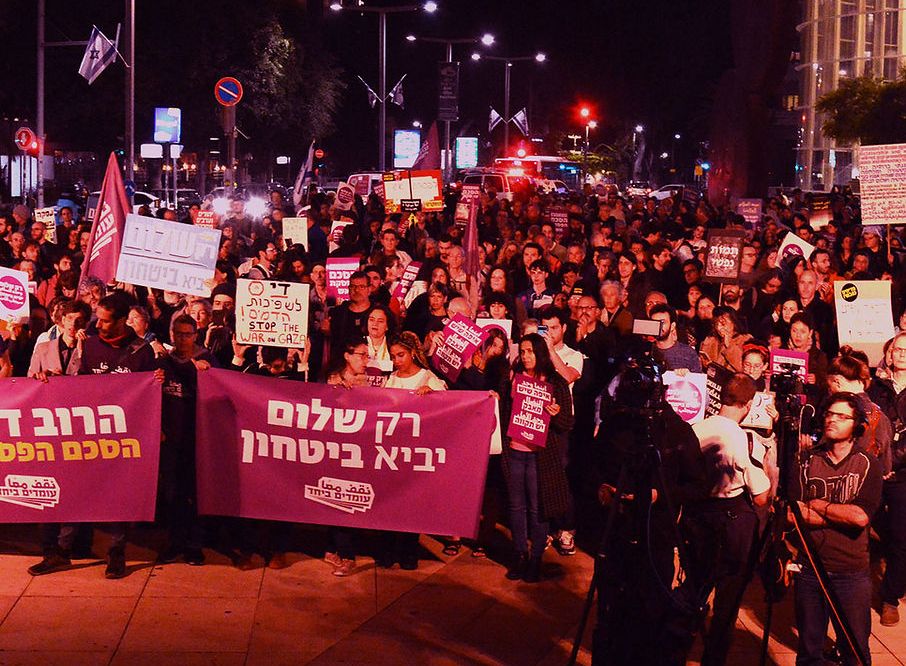
Standing Together, joint Jewish and Palestinian progressive grassroots movement mobilizing Jewish and Palestinian citizens of Israel against the occupation and for peace, equality, ..
 Urban Wronski Writes
Karl Marx is reputed to have said “religion is the opiate of the masses” and I believe Karl was correct. All the time the people are in a religious stupor, corrupt political ideologies will rule the day. Should the day come when the people see religion for what it really is, our world will be a much better place.
LikeLike
I like to picture god busy in his office, located in his high rise office building, located in the CBD of heaven, somewhere in the wider universe. His office is furnished with a huge desk under which sits an ornate golden mesh basket fitted with a golden plaque, engraved with two words in ornate script. Just two words, “Too Hard”.
Every day he leans down and retrieves a screwed up postal note from it. This he unravels, smoothes it out on the desk and reads the scribbled single word. GAZA.
LikeLike