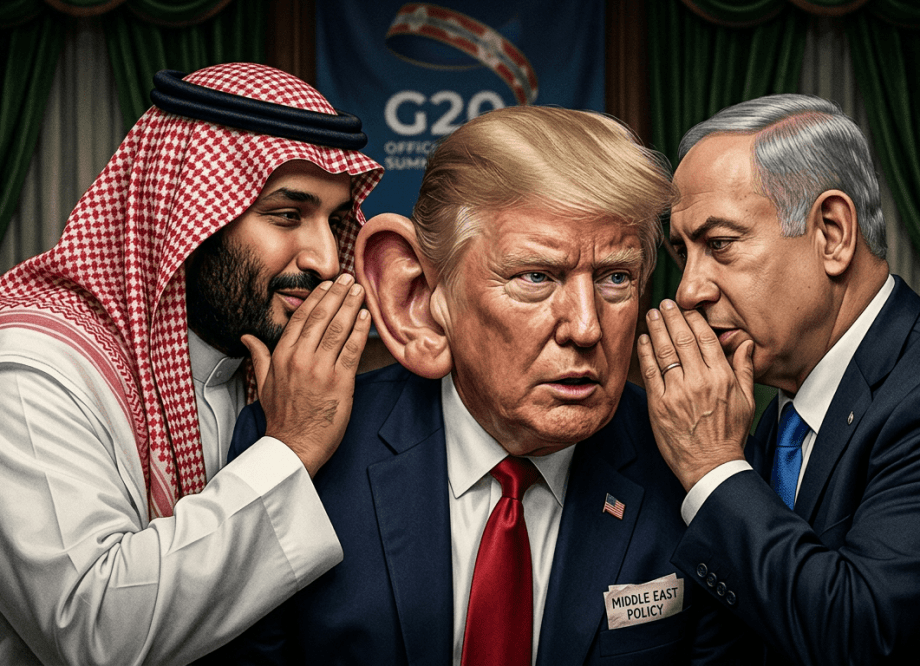
“Operation Epic Fury” sounds like a fourteen-year-old boy who has been playing too much Call of Duty. It’s a perfect fit for the Peter Pan that Donald Trump has running the Pentagon; a former Fox & Friends weekend anchor whose less-than-stellar career so far provides a vital clue to the chaos, the incompetence, and the claque of yes-men that the forty-seventh president calls a cabinet.
Pete Hegseth is the most instructive appointment of the Trump era; an age defined by the Queen Bee principle, in which the president surrounds himself with a cast of flawed, diminished and pliable no-hopers, all chosen not for what they can do but for what they cannot: outshine Trump.
Outshine? It’s a recipe for disaster. As Michael Wolff notes on The Daily Beast, Trump’s minions have been stripped of all agency. They exist to reflect, to amplify, to affirm. The Queen Bee does not want talent in the hive. Talent is a threat. What the Queen Bee wants is an audience.
It is a principle that explains, not merely Hegseth, but the entire cabinet. The pliable Marco Rubio, who once pitched himself as a conviction politician, before a U-turn on immigration and now a dutiful echo; the parade of loyalists and flatterers installed wherever independent thought once lived. The forty-seventh president has not assembled a government so much as his own grotesque private freak show. He has set up a type of fairground mirror.
Hegseth is the mirror made flesh; a Fox News viewer’s fantasy of military authority, all jaw, scripture and manic bellicosity, set up to run the world’s largest military by a sloth who watches more television than any commander-in-chief in history and mistakes the performance of strength for the thing itself.
The Secretary of War wears his Christianity on his sleeve while ordering triple-tap strikes on schools. Who else could read the Sermon on the Mount and concluded that the relevant takeaway is fire for effect. Blessed are the meek, for they shall be massacred in the second and third pass?
The career officers who built their professional lives on the laws of armed conflict; on the painstaking, unglamorous discipline of distinguishing combatants from civilians, of proportionality, of the rules that separate a military from a mob, look at Hegseth and see not a commander but a mascot. His win-at-all-costs approach, his square-peg religiosity jammed into the very round hole of Pentagon culture, his enthusiasm for what the US military calls the double-tap, a cruel war crime; all of it has offended men and women who have spent careers trying to conduct war within its legal and moral constraints.
But Hegseth was not appointed to satisfy career officers. He was appointed to perform a feeling; the flag-waving, scripture-quoting, testosteronic bovver boy of the culture war translated directly into actual war, with actual children in actual schools. The career officers are not the audience. The Fox News viewer is the audience. And for that audience, Pete Hegseth is not a square peg at all.
He is, God help us, a perfect fit.
A Name for This War: The War of Donald’s Ear
Now let us give this war the name it deserves, because “Operation Epic Fury” is a preposterous pose, and history has always rewarded those who name things honestly.
History also has a fine tradition of naming wars after the absurdity of their origins. The War of Jenkins’ Ear, a preposterous 1739 conflict triggered when a British sea captain waved his own severed ear at Parliament, gave posterity one of its most deliciously deranged casus belli, (an act or situation that justifies a war). In that spirit, let’s go with the War of Donald’s Ear.
The ear in question is the pink shell-like ear Donald Trump lent, with almost indecent willingness, to two shady characters who had been whispering into it for years: Benjamin Netanyahu, Prime Minister of Israel, and Mohammed bin Salman, Crown Prince of Saudi Arabia. Two men who would not rest, who would not sleep soundly in their palaces, until they saw Iran bombed back into one of the Stone Ages. Two men with everything to gain from American military power and nothing to lose; since it would be American soldiers, not Israeli or Saudi ones, doing most of the dying.
The difference between Jenkins and Trump is instructive. Jenkins lost his ear involuntarily at sea. Trump lent his eagerly, in the White House Situation Room, over a slide deck, over a phone call, over an intelligence tip whispered at exactly the right moment by exactly the right man. And ninety million Iranians are paying the price. As is Trump, although he’ll try to put it on the slate.
How the War Was Sold: Two Homicidal Maniacs and One Pliable Ear
The backstory of how this war began is as tawdry as it is consequential.
Netanyahu’s campaign to drag America into war with Iran can be traced, in its current iteration, to a meeting in the White House Cabinet Room on February 4, the first visit of his second Trump era. He reminded Trump that Iran had plotted to assassinate him, then walked through a detailed slide deck arguing Iran was racing toward a nuclear threshold.
“Look, Donald,” Netanyahu told him, “You can’t have a nuclear Iran on your watch.” He paused for dramatic effect and looked the president directly in the eye.
That’s not diplomacy. That’s a sales pitch, with Trump’s vanity as the product being sold.
Netanyahu showed Trump a video featuring potential post-regime leaders, including Reza Pahlavi, the exiled son of Iran’s last shah; Iran’s government-in-waiting, neatly packaged, ready for installation. Trump’s response: “Sounds good to me.”
Within hours, American intelligence officials were tasked with evaluating the Israeli proposal. The CIA Director used a single word to describe Netanyahu’s promised popular uprising: “farcical.” Trump dismissed the finding. Regime change was, he said, “their problem.” What mattered were the parts he believed could be executed: striking Iran’s leadership and dismantling its military.
Bibi lit the fuse. On February 23, Netanyahu rang Trump with a stunning intelligence tip: Iran’s supreme leader and his top advisers were all meeting at one location in Tehran that Saturday morning. They could all be obliterated in a single devastating airstrike. One phone call. A narrowing window. Two men who had found each other, and a war that had been looking for an excuse.
Not to be outdone was MBS, the other man at the ear, acting the reluctant ally while pulling every available string behind the velvet curtain. The Washington Post reports that the Saudi Crown Prince made many private calls to Trump urging military action, even while publicly signalling support for diplomacy.
MBS privately warned Trump that inaction would leave Tehran “stronger and more dangerous.” The Saudi Foreign Ministry, naturally, denied everything; the same government that is currently hosting the American troops, intercepting the Iranian missiles, and absorbing the strikes that make the war possible.
Netanyahu brought ideology, targeting data, and the moral authority of a country under direct Iranian missile fire. But he couldn’t write a cheque covering the near-billion-dollar daily operating cost of the war. MBS could. And that capacity, the ability to make the most expensive military operation since Iraq financially palatable to a president who measures every relationship in transactional terms, is why the Saudi model was winning the Oval Office even as Netanyahu’s rhetoric dominated the airwaves.
As one analyst put it with some precision: Netanyahu brought the ideology and MBS brought the chequebook, and to Trump, the chequebook is everything.
Two men, two agendas, one pliable ear.
“Because They’re Animals”: The Quote That Should Haunt the World
Now to the heart of it. A reporter asks Trump how bombing Iran’s power plants and bridges would not constitute a war crime.
Trump’s reply: “Because they’re animals.”
“Do you know what a war crime is? A war crime is letting Iran have a nuclear weapon.”
In two sentences, the logic of the school-yard bully becomes foreign policy. If they’re animals, the Geneva Conventions don’t apply. If they’re animals, the laws of war; built on the foundational premise that all human beings, even enemy civilians, retain their humanity, simply dissolve. If they’re animals, the hospitals, the schools, the power plants, the desalination systems that ninety million people depend on to survive are all legitimate targets. All just pest control. Or a lawn to mow, Netanyahu’s quip about killing Palestinians, a term popularised by Israeli strategists Efraim Inbar and Eitan Shamir.
This is not accidental rhetoric. This is not a man speaking loosely in the heat of a press conference. This is the oldest move in the genocidal play-book, deployed with the full authority of the presidency of the United States: strip the humanity first, then strip the rights.
History is not subtle on this point. The Holocaust required the prior dehumanisation of Jews as Untermenschen, subhuman, before the camps became possible. American slavery required the legal and cultural denial of Black humanity before it could be systematised across generations.
Rwanda required the Tutsi to be called inyenzi, cockroaches, on the radio before the machetes came out. Aboriginal peoples of this continent were excluded from the national census; not counted among the people of their own country, until the 1967 referendum, within the living memory of people who are still alive and still waiting for a treaty.
Every act of mass extermination, every system of organised dispossession in human history, has been preceded by exactly this move: the removal of the human designation from the people who are about to be killed, displaced or enslaved.
Trump knows this, or his minders do, and they are using it anyway. Calling ninety million Iranians “animals” is not bluster. It is preparation. It is the ideological infrastructure of atrocity, laid in public, on camera, before a press corps that largely moved on to the next story.
Congressman Ro Khanna calls Trump on it: “He is threatening the entire destruction of a civilisation. He is calling Iranians animals.” Former House Speaker Nancy Pelosi calls for Trump’s removal from office. Senate Minority Leader Chuck Schumer calls him “an extremely sick person.”
And the global chorus of leaders that should have followed? The rebuke from allied capitals that the moment demanded? The chorus, in the main, did not come. What came instead was the dopamine hit; the next outrage, the next deadline, the next Truth Social post, and the world scrolled on.
Two-Week Trump: The Art of the Infinite Pause
Which brings us to a pattern which will be familiar to every Trump-watcher around the world.
On the evening of April 7, ninety minutes before his own deadline for Iran to reopen the Strait of Hormuz or face the destruction of every power plant and bridge in the country, Trump announced a two-week ceasefire, brokered by Pakistan. He called it “a big day for world peace.” He writes on Truth Social that the US would help ease the “traffic buildup” in the Strait of Hormuz.
“Big money will be made,” he adds.
Not peace. Not Iranian sovereignty. Not the rule of law. Big money.
The two-week ceasefire is not a ceasefire. It is not diplomacy. It is not a step toward peace. It is the rhetorical equivalent of what Trump has always done when he wants to defer something forever: he makes it sound imminent. Before he puts it off forever.
Two weeks. Always two weeks. Two weeks from now the healthcare plan will be unveiled. Two weeks and the infrastructure bill will be ready. Two weeks and there’ll be a deal with Iran. In Trump’s universe, a universe in which, as observers of his cognitive trajectory have noted with increasing alarm, two weeks may genuinely feel like forever, the two-week pause is the art of the infinite deferral dressed as decisive action.
The purpose is clear and consistent: exhaust the opposition, blunt the momentum of outrage, reset the news cycle, and leave the underlying situation precisely unchanged while claiming credit for statesmanship.
Iran, meanwhile, holds the one card of genuine leverage that no amount of bombing can remove: the Strait of Hormuz, through which twenty percent of the world’s daily oil supply passes. For as long as that strait stays closed, Iran has a seat at the table. The two weeks will expire. Another deadline will be announced. The bombs, or the threat of bombs, will resume. And Trump, having declared victory, will declare it again.
The ceasefire is the intermission. The war is the show.
Part Two, tomorrow, 9 April, Part Two: A Whole Civilization Will Die Tonight


2 thoughts on ““Because They’re Animals”: Donald Trump, the War on Iran, and the Rules Nobody’s Enforcing”
Comments are closed.