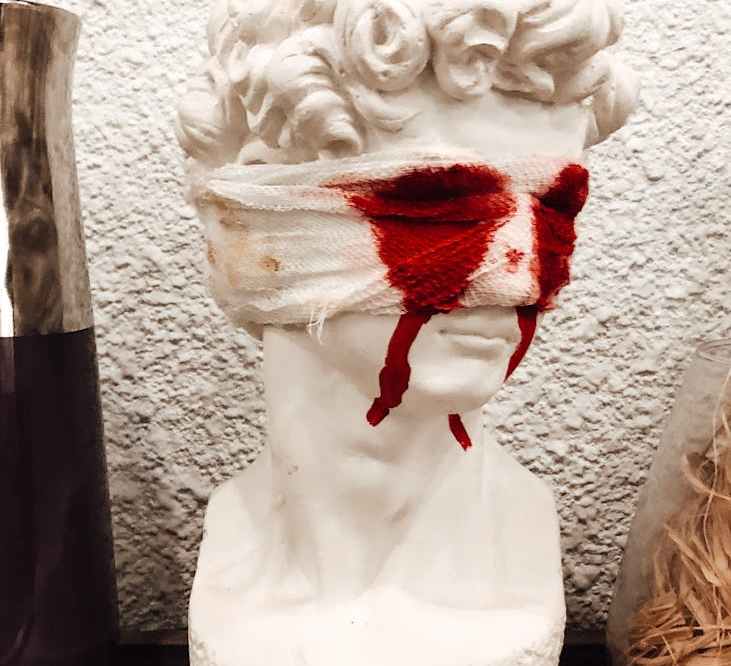
It is a truth universally acknowledged, at least from the marbled bunkers of Canberra to the shock-jock studios of Sydney, that a nation in possession of a good fortune and a bad conscience must be in want of a foreign martyr. And lo, our prayers have been answered from across the Pacific with the tragic shooting of one Charlie Kirk, an American commentator of whom, I confidently assert, not one in ten Australians stirring their Weet-Bix that morning could have named.
Yet, by the time the second kettle had boiled, a most miraculous transubstantiation had occurred. This gentleman, heretofore unknown, was instantly canonised as the patron saint of free speech, a latter-day Thomas More for the digital age, and a convenient cudgel with which to belabour that most protean and useful of phantoms: the “woke, terrorist left.”
The sheer alacrity of this beatification would be a marvel to behold, were it not so utterly, transparently, and characteristically Australian in its performative hypocrisy. We have, it seems, built a thriving industry on the import of American culture wars, applying them with all the subtlety of a dropped brick to our own peculiar domestic anxieties.
Consider, if you will, the curious case of the journalist Karen Attiah, lately of The Washington Post. The poor woman was given the boot for the high crime of quoting the newly-minted Saint Charlie’s own words back to the world. Her blasphemy? To remind her readers that the dear departed had opined that certain prominent Black women lacked “the brain processing power to otherwise be taken really seriously” and had to “steal a white person’s slot.”
The offence, you see, is not in the saying of the thing by the provocateu*r*; the offence is in the repeating of the thing by the reporte*r*. It is a logic that would make a Jesuit blush. The man who built an entire career, and a considerable fortune, upon the sturdy foundation of inflammatory rhetoric must now, in death, be protected from the very consequences of that rhetoric. We must venerate the sermon but never speak of the sin. It is a most convenient canonisation.
But why, pray tell, should this spectacle so captivate the Australian political imagination? Why should our own homegrown tribunes, such as the Honourable Andrew Hastie—a man who I suspect finds the Book of Revelation more compelling reading than the ministerial brief—feel compelled to deliver a eulogy comparing this media personality to the Apostle Paul himself? One might think the Coalition had more pressing concerns, what with their polling numbers performing a swan dive worthy of the high cliffs at Kurnell.
The answer, I propose, is as simple as it is cynical. The late Mr. Kirk is not a person to them; he is a symbol. A blank page upon which they can inscribe their own grievances. He is the perfect vessel for a pre-existing narrative about being besieged by a monstrous, un-Australian progressivism. His death is not a tragedy to be mourned with nuance, but a weapon to be wielded with gusto. It provides a glorious, distraction from the mundane realities of a crumbling party, cost-of-living pressures, and their own intellectual and moral bankruptcy.
This is the Martyrdom Machine, and it operates with a chilling efficiency. Before the body was cold, the narrative was set in concrete: slain by leftist extremism. Not a complex individual with a complex legacy, but a pure, uncomplicated symbol. His lifetime of provocation is scrubbed away, leaving only the gloss of sainthood, to be used to justify a more aggressive, more paranoid style of politics. It is the oldest trick in the book: find a martyr, declare a crusade.
And what of our own Fourth Estate? The West Australian, which heretofore found Mr. Kirk beneath notice, suddenly graces its front page with his visage, breathlessly reporting on the alleged shooter’s “transgender partner” as if this single detail were the Rosetta Stone that explains the entire tragedy. It is not journalism; it is alchemy, turning the base metal of tragedy into the gold of sensationalism.
The most telling silence, however, hangs over the murder of Democrat lawmaker Melissa Hortman and her husband. Where are the biblical comparisons for them? The breathless tributes from our backbenchers? The front-page spreads? Their deaths are not useful to the narrative. They do not fit the required parable of good versus evil, and are therefore relegated to the status of a mere tragedy, unworthy of political instrumentality.
This entire wretched affair holds a mirror up to our national character, and the reflection is not a flattering one. It reveals a colonial cringe of the mind, an eager willingness to import the most toxic aspects of American political discourse and pretend they are our own. It reveals a poverty of ideas so profound that we must borrow our martyrs from overseas. And most damningly, it reveals a stunning lack of intellectual honesty.
A true tribute to any life lost to violence would be a sober reckoning with complexity. It would acknowledge that a man can be a flawed, controversial figure and that his killing was a monstrous injustice. It would force us to examine the entire ecosystem of vitriol—on all sides—that makes such violence imaginable.
But that would require courage, nuance, and a dedication to truth over tribalism. Qualities, it seems, in far shorter supply than sanctimonious press releases. We would rather have a convenient saint than an inconvenient truth. And for that, we are all the poorer.


Thank you for returning to blogging David. I’m very much enjoying your recent posts!
LikeLike