The Greens have a new leader. The press gallery has a new roughie. The field has been called to the post and the commentators are already in the box.
And they’re racing.
That is how we call politics.
With the race that stops a nation only a couple of pension cheques away, it is timely to reflect. Every contest is called from the stand: who led at the turn, who is weakening in the straight, who has drifted in the betting. A budget, a party-room ballot and an election campaign all come home in the same breathless monotone.
It is a strange old habit, Possums. We just will not give up our view of politics as a horse race.
We gave the world the secret ballot. We built preferential voting and two houses of parliament, one of them expressly designed not to behave like the other. We have independents, crossbenchers, preference flows and governments that occasionally discover a majority in one chamber is not ownership of the Parliament.
Yet the moment the little TV camera lights start winking, the whole thing becomes first past the post. The favourite is in front, the roughie is out the back, and the rest is colour commentary.
On Wednesday the Greens ran their own race. Larissa Waters stood down as leader because, in her words, her “health is getting worse”. We wish her well. The leadership, meanwhile, normally settled by consensus, went to a ballot. David Shoebridge polled six, Mehreen Faruqi three and Sarah Hanson-Young two. After preferences, Shoebridge won seven to four.
The whip, Nick McKim, then did something rare for the Greens, who normally just stick to announcing the new leader’s name. McKim read out the numbers. A result. A count. A photograph.
The Greens had printed their own photo finish and pinned it to the board.
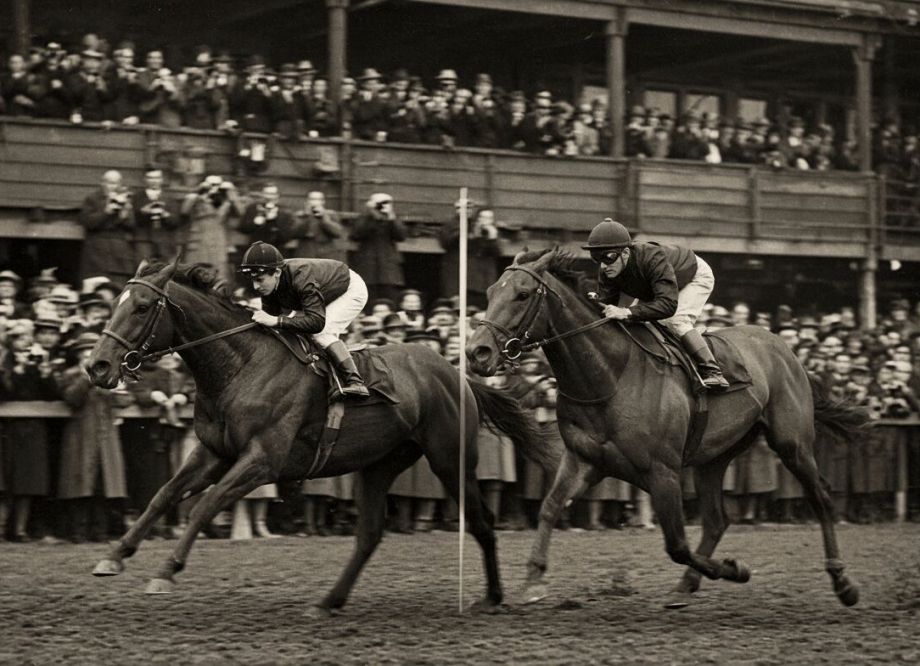
Seventy-eight years ago, Flemington did the same.
The 1948 Melbourne Cup was the first decided by the photo-finish camera, newly installed at the course. The horse in front, by half a head, was Rimfire, and Rimfire was not supposed to be there.
He was six years old. His form was poor. He looked crook on the eve of race day. He started at 80 to 1.
Rimfire’s jockey, Ray Neville, was just a kid. Teenagers hadn’t been invented. A fifteen-year-old apprentice from Birchip, a day shy of sixteen, who had held his licence for eight weeks. He got the ride because he could make the weight. The trainer kept it from him until race day. No point keeping the lad awake all night.
Neville used to tell his children that as he came round the last bend “he just went for it”. Down the straight, Rimfire held off Dark Marne under Jack Thompson, one of the finest jockeys in the country. Thompson was certain he had won.
Then the camera spoke. What a boil-over.
Rimfire. The boy.
A perfect metaphor for Australian political journalism? The trouble is not that the gallery loves a horse race. The trouble is that it keeps calling the wrong one.
THE FORM GUIDE
Start with the weights. At the 2025 election the Greens lost three of their four lower-house seats, Adam Bandt’s Melbourne among them. Last Green standing, Elizabeth Watson-Brown in Ryan, said that it “might be a bit lonely”. One seat. Minor party. The handicapper has spoken.
Except the same election produced an inconvenient truth. The Greens’ national primary vote was 12.22 per cent, almost exactly the 12.25 per cent of 2022. The vote did not collapse. It was simply spread across the map in a way that returned almost no seats. One voter in eight. One seat in a hundred and fifty.
Then there is the Senate. The Greens came out of 2025 with eleven senators, enough for Labor and the Greens together to pass whatever they could agree on. Dorinda Cox crossed to Labor, and they are now ten.
Ten senators and one member. Call them minor if you like. Just don’t confuse minor with immaterial.
THE VACUUM
Shoebridge says the Greens are here to replace Labor. Longer odds than Rimfire, says the form guide, and the gallery reaches instinctively for the sports pages. Nobody read the next sentence.
“We’re here to fill the vacuum that has been left by the Labor Party rushing to the right.”
That was the sentence to lead with, because it is the only part of the claim that needs no odds at all. The vacuum is real: Labor has been hollowing out for forty years. It began with the Accord, when the party of the shop floor learned to speak fluent Business Council. It continued through privatisation, casualisation and a submarine pact that, in the words of Australian Foreign Affairs, “became bipartisan policy literally overnight”.
Every time Labor moved right, somebody was left standing in the paddock. Some of them now vote Green. Others, as Shoebridge also argued, have wandered off towards One Nation.
So why must the Greens replace Labor before we treat them as significant? That is not how the system works. A party does not need the Lodge to change what the Lodge can do. It needs votes, leverage, issues a government cannot ignore, and sometimes nothing more than the nerve to stand in the doorway.
THE RACE NOBODY CALLS
Consider the veterans. The Albanese Government proposed a $5,000 annual cap on allied health services for veterans, due to start in July 2027. Veterans called it a death sentence. Shoebridge and Jacqui Lambie got a bill through the Senate to stop any such cap being imposed. In September, Veterans’ Affairs Minister Matt Keogh took the cap “off the table”.
Lambie, the Coalition and the veterans’ groups can all claim a share of that. Politics is full of people arriving at the winning post carrying their own saddle.
Which is precisely the point. The government has 94 members in the House and the Greens have one. The government has 30 senators and the Greens have ten. And still the government cannot simply do as it likes.
The Greens matter without winning government. They matter precisely because they are not the government.
That is the race the form guide doesn’t print.
THE PRESS GALLERY’S FAVOURITE HORSE
Now to our corporate cartel of political horse callers.
The same horses. The same barriers. The same track. The same serene certainty that the most important thing in politics happened yesterday afternoon in a party room.
So a change of leader becomes a race. Who had the numbers? Who is disappointed? Who will Labor fear? Who will One Nation exploit?
The Nightly had the new leader “branching out” as the party “turns over new leaf”. The puns were in the mounting yard before the ink was dry.
And the Greens are scratched before the barriers, as they always are.
Lose a seat? Finished.
Lose a leader? Finished.
Too radical? Finished.
Help Labor? Finished.
Their internal disputes prove dysfunction. Their deals with Labor prove capture. Their refusal to deal proves they are unserious. Their Senate leverage is obstruction, their losses are extinction and their persistence is an annoyance. Whatever happens, the horse stays a roughie.
Meanwhile, down the back, almost unnoticed, are the questions that matter. Why does one voter in eight keep backing this party? Why do governments keep negotiating with it? Why do its policies, once dismissed as mung-bean sandal-wearing lunacy, keep turning up in Labor legislation?
Ask how a hard cap on the gross emissions of the country’s biggest polluters, 140 million tonnes a year and falling, ended up in Labor’s own Safeguard Mechanism in 2023. It was the price of Greens votes in the Senate.
Those questions make poor television. So the leadership race gets the camera, and the political class gathers around the tote board to discuss the tote board.
The gallery’s question is always: can they win?
The better question is: what happens because they are running?
THE .22
A rimfire cartridge is a .22. The rabbit gun. Small bore and unpretentious, the sort of firearm that lived behind the farmhouse door because the world occasionally required a rabbit to be dealt with and nobody needed a consultant’s strategic review to do it.
Shoebridge is one of the loudest critics of AUKUS. The Greens oppose the nuclear-submarine project outright. So here they are, a .22 in a contest with a fleet of submarines due some time in the 2030s.
Small things can still hit what they are aimed at. Farmers never kept the .22 to win a naval engagement. They kept it because it did one job well.
Parties have jobs too. Governments govern. Oppositions oppose. Senators scrutinise, bargain, obstruct and, now and then, force a government into retreat. A functioning democracy does not need every party in the chamber to be a government in waiting. It needs forces in the chamber that governments have to reckon with.
ASK THE CAMERA
In 1948 the camera was meant to settle an argument. Instead it became part of the legend. Thompson could not believe he had lost. The crowd could scarcely believe it either. The camera did not care. It showed what happened.
That is all the Greens are owed by political journalism. A camera.
Look at the vote. Look at the Senate. Look at the legislation, the amendments, the negotiations. Look at where they have used their leverage and where they have squandered it. Then decide what kind of animal it is.
There is a fair case that the Greens have problems. Internal divisions. Lost seats. A vote that is geographically inefficient. A leadership ballot that has just exposed an argument about the party’s own democracy, with Faruqi warning that “without a member vote, we cannot call ourselves a grassroots party”.
Replacing Labor may be a long shot. That is for the voters to settle, not a columnist, a bookie or a panel show.
But the opposite error is lazier. Assume a party cannot form government and therefore does not matter, and you have misunderstood the machinery entirely. The Greens may not even be entered in the Cup. They are running another race: over what governments can pass, what they can dodge, which arguments become respectable and which interests get challenged.
Less glamorous. Considerably more important.
THE SADDLE
Ray Neville collected £25 for winning the 1948 Melbourne Cup. Enough for a new suit and a saddle.
Then somebody stole the saddle.
Win the Melbourne Cup at 80 to 1 and somebody nicks the bloody saddle.
Neville rode until 1968 and spent years afterwards issuing barrier certificates. This year Birchip painted his story across its silos.
The Cup is run on Tuesday 3 November. The camera will be there. So will the gallery, and so will the bookies. And somewhere down the track will be a horse everyone has already written off.
They said 80 to 1.
Ask the camera.


Right again, David. I laugh, through gritted teeth, at those who refer to Albo’s lot as ‘centre-left’. As you say, they vacated that part of the field long since. The Greens, David Pocock and assorted Teals are the only progressively inclined options we have, but the forces of reaction blunt much of what they set out to achieve. We still suck up to dRumpf and his controller, Bibi. We continue to heat the planet. It’s not looking good.
Keep up the good work! Cheers, David B.
LikeLike
Thank you, David B. Labor left the centre-left long ago and still expects to be called the favourite. The crossbench can’t win the Cup, but as the veterans just found out, it can still change the race. Cheers, David T
LikeLike