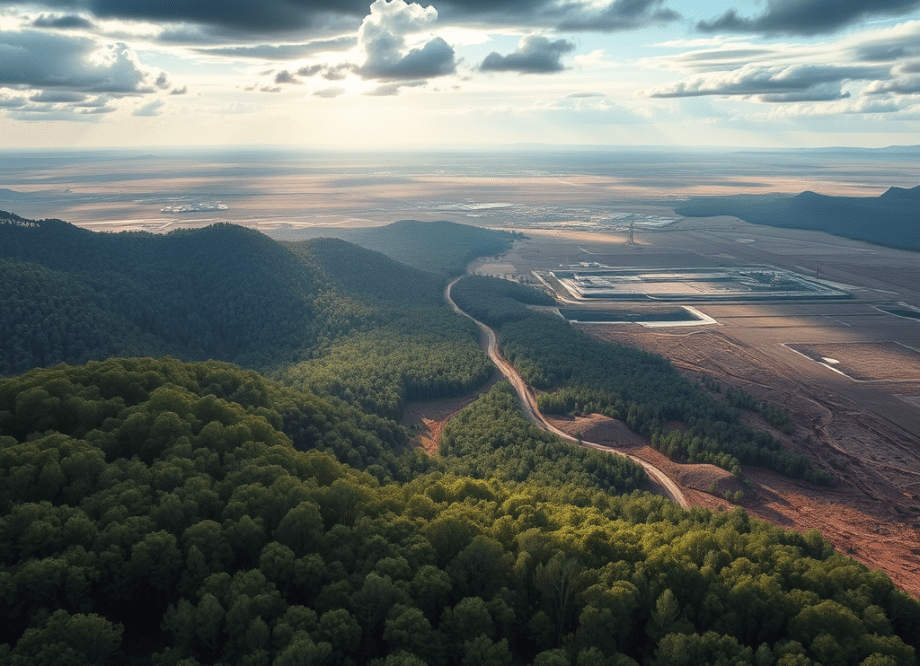
This is how you capture environmental policy without killing the environment entirely. You write laws that prevent environmental protection from working.
The Real Question
Did the federal government’s environmental protection reform bills published 27 November 2025, stop the “ledger of degradation”, as Ken Henry calls the old law, or did it just slow it up enough to look serious while still greasing the wheels of destruction? Is the new law more than a Swiss Army Knife of loopholes? Or has it turned crisis into catastrophe?
It gets an F for fail from every independent environmental organisation in Australia.
New coal and gas projects will still be approved. The Environmental Defenders Office confirms: climate impacts won’t be assessed, only disclosed, and incompletely, excluding scope 3 emissions. The Climate Council warns that “new and expanding projects which undermine our domestic climate targets and key policies like the Safeguard Mechanism can proceed unchecked.”
Native forests will still be cleared. For eighteen more months under Regional Forestry Agreements. And indefinitely after that using the “pay to destroy” offset mechanism that The Australia Institute identifies as fatally flawed; the same system that’s failing in NSW will now operate federally.
Climate considerations remain explicitly forbidden in environmental decision-making. Not just absent. Forbidden. The law prevents the Environment Minister from considering whether approving a coal mine or gas field will accelerate climate catastrophe.
We’ve managed decline. We’ve made degradation marginally slower. We’ve added some transparency and constraints. But we haven’t stopped it. We’ve just ensured it happens under colour of law, with the appearance of scrutiny, while the mining industry’s fundamentals stay intact. It’s worse than a Clayton’s law, it’s a deadly duplicity.
What The Independent Experts Are Telling Us
When every credible environmental voice in Australia; legal experts with 40 years of practice, climate scientists, conservation biologists, policy analysts; all say the same thing, that’s not ideology. That’s evidence. When government can flout both popular opinion and expert evidence in how best to protect what is left of our unique and vital natural environment in favour of the mining lobby; nature’s nemesis, it is an epic fail.
The Environmental Defenders Office says positive elements are “undermined by extensive exemptions and opportunities for ministerial discretion.” Their core concern: “Without stronger accountability, removal of exemptions allowing unsustainable impacts, and clear limits on discretion to ensure the laws can be upheld, these Bills may not deliver the environmental protections Australians expect.”
The Australian Conservation Foundation warns that “weak laws will put more valuable forests under a bulldozer, pollution into the atmosphere and destroy Australia’s natural wealth.”
The Climate Council states unequivocally: “The proposed reforms do not address the biggest threat to Australia’s environment: climate change.”
Greenpeace finds “a number of very serious and unacceptable flaws” including climate change exclusion, overly broad national interest exemptions, and weak offset provisions.
WWF-Australia is direct: “These bills do not go far enough to protect our fragile environment.”
The Wilderness Society calls for ending “dangerous exemptions for destructive practices like native forest logging” and establishing “an independent watchdog to enforce our laws fairly and transparently.”
The Australia Institute concludes the bill “would weaken environmental protection” through its flawed offset scheme that “transfers responsibility for nature destruction from project proponents to the public.”
These organizations don’t agree on everything. But they agree on this: Labor’s “landmark” reform doesn’t deliver the fundamental change all Australians deserve, Professor Graeme Samuel demanded and Australia’s environment requires.
Five Years After Samuel
Samuel delivered his review on 30 October 2020. Labor introduced this bill on 30 October 2025; exactly five years later, as Minister Watt noted in his speech. The symbolism was deliberate. But symbolism isn’t substance. The delay is inexplicable given the consultative nature of Samuel’s review and the terrifying acceleration of environmental destruction.
National Environmental Standards: Samuel, whose inquiry took submissions from all Australians, recommended mandatory, comprehensive standards as foundational. Labor’s bill provides power to make standards but no requirement they be made, no specification of content, and, critically, Parliament voted before seeing draft standards. The EDO notes the first draft standard released doesn’t meet Samuel’s recommendations.
Independent National EPA: Samuel wanted genuine independence to remove political interference. Labor created an EPA whose decisions the Minister can override. Greenpeace and the Greens wanted the CEO making approval decisions. Labor said no.
Indigenous Cultural Heritage: Samuel wrote that protection was “a long way out of step with community expectations” and called for comprehensive co-designed reform. The EDO’s assessment: “In our view there is nothing in the current Bills that would effectively strengthen the role of First Nations in environmental decision making.”
No Cherry-Picking: Samuel explicitly warned against this, calling his recommendations a “highly interconnected suite.” Labor cherry-picked. They took streamlined approvals and devolution to states; the bits business wanted. They watered down or excluded the protections and standards that were supposed to balance those changes.
Climate Change: Samuel didn’t recommend a climate trigger in 2020. But it’s 2025. The climate crisis has intensified. The science is clearer. The International Court of Justice has opined that states must regulate fossil fuel emissions. Labor has made it illegal for the Environment Minister to consider climate when approving new coal and gas.
Five years. And we’ve got reforms that fall short on every measure that matters.
How Capture Actually Works
This is what policy capture looks like when it’s working. Not backroom deals or brown paper bags. Just the smooth mechanics of institutional betrayal where mining interests write the policy framework and government provides the progressive rhetoric to sell it.
It’s the classic bait and switch. You shrewdly draft legislation so pro-industry that opposition is guaranteed; Larissa Waters’ “1,400 pages gift-wrapped for big business” wasn’t hyperbole. You cunningly include fast-track approvals for coal and gas, broad exemptions, weak standards.
Then you step back and let the Greens extract visible concessions: remove coal and gas from fast-track, sunset forest logging exemptions, close the national interest loophole for fossil fuels. Real constraints that environmental groups can genuinely celebrate.
But the lethal fundamentals stay intact. Coal and gas projects still approved; just slower. Native forests still logged for 18 months, then clearable via offsets. Climate considerations explicitly excluded, a masterpiece of bastardry. “Pay to destroy” becomes legal federal policy. Ministerial discretion preserved. National standards made optional, not mandatory.
Then you declare victory. The Prime Minister celebrates “a great win for the environment and a great one for business.” The Greens celebrate constraining coal and gas. Environmental groups note the wins on forests. The mining industry complains publicly, which makes the government look tough, while knowing they’re still winning.
And the independent environmental experts? Their detailed critiques get buried in the news cycle. Most voters will remember only “environmental reform passed” without remembering that every credible environmental organisation said it was inadequate.
Australia will continue to be a global deforestation hotspot; WWF’s data shows we’ve destroyed 7.7 million hectares of threatened species habitat since 2000. That won’t stop under these laws. It’ll just happen with offset fees attached. Our climate commitments will continue to be undermined by fossil fuel expansion. Our environment will continue to be captured by the industries profiting from its destruction. And the government will celebrate this as historic environmental reform while every independent environmental organisation confirms it doesn’t stop the decline; it manages it, legitimises it, writes corporate capture into law.
What Australia Actually Needs
Not this theatre. Not this managed decline dressed up as reform. What we need—what every independent environmental expert is telling us we need—is fundamentally different:
- An independent Environmental Commissioner with statutory authority to challenge ministerial decisions, audit government performance against environmental standards, and report publicly on how political pressure overrides science. This was Samuel’s key requirement. Not an EPA whose decisions the Minister can override. A genuinely independent watchdog with teeth.
- Mandatory national environmental standards that actually halt decline, not manage it. Standards that Parliament must see before voting on the framework. Standards that set clear limits on habitat destruction, not vague powers the Minister may or may not exercise. And whose precise rationale is certain to remain an embargoed secret.
- A climate trigger that requires assessment of whether new fossil fuel projects undermine Australia’s Paris commitments and accelerate climate catastrophe. Not disclosure. Not exemptions for “national interest.” Assessment and rejection authority based on climate science.
- Real Indigenous authority in environmental decision-making, not consultation that government can ignore. Co-designed heritage protection that respects 65,000 years of land management knowledge instead of marginalising it.
- An end to offset schemes that transfer responsibility for nature destruction from project proponents to the public. No more “pay to destroy.” No more pretending that planting trees in Queensland compensates for logging ancient forests in Tasmania.
This isn’t radical environmentalism. This is what Samuel recommended. What independent experts are calling for. What 81 percent of Australians want. What the science demands.
And it’s exactly what Labor’s reforms don’t deliver.
Remember This
Every new coal mine approved under laws that forbid considering climate damage will remind voters what Labor chose. Every hectare of threatened species habitat destroyed through offset fees will demonstrate whose interests this government serves. Every time ministerial discretion overrides environmental science will prove what capture looks like in practice.
Somewhere in Bean and Warringah and Canberra; in every climate-conscious seat where margins are tight and voters are watching, people are taking notes. They’re reading the EDO submissions. They’re following the Climate Council analysis. They’re comparing Labor’s rhetoric about climate leadership with Labor’s reality: 31 fossil fuel projects approved and a new law forbidding climate consideration in future approvals.
The forests will keep falling. The emissions will keep rising. The habitat destruction will continue under colour of law. The gap between what Labor promised and what Labor delivered will widen with every approval, every exemption, every ministerial override. That’s the real cost of this “historic reform”; not just environmental decline, but the legitimisation of that decline under laws that pretend to prevent it.
As EDO Managing Lawyer Revel Pointon said: “This reform moment must be about fixing the failures of the past.” Instead, Labor has entrenched them. Codified them. Made them legal. Written mining industry priorities into environmental law and dressed the whole performance in the language of balance and compromise.
Australia’s environment deserves better than managed decline. Our democracy deserves better than this kind of capture. And voters deserve a government that prioritizes ecological survival over mining profits.
Remember that when they come asking for your vote. Remember what they promised and what they delivered. Remember that they had a chance; five years after Samuel, with clear expert guidance, with massive public support, to get this right.
And remember what they chose instead.
What This Moment Demands
Five years after Samuel documented the failures, we’ve institutionalised them. Written them into statute. Made them legal.
But here’s what Labor forgot: the same organisations that documented these failures aren’t going away. The Environmental Defenders Office will litigate every loophole. The Climate Council will document every approval that undermines our climate targets. The Australian Conservation Foundation’s 700,000 supporters will mobilise. Greenpeace will expose every “national interest” exemption. WWF will track every hectare of habitat destroyed under the offset scheme.
They’ve built the case against this bill. Now they’ll build the case against its implementation.
And they won’t do it alone.
Because the 70 per cent who want climate embedded in environmental law? They’re not a polling sample. They’re a constituency. The 44 per cent of Labor voters who said climate protections matter? They’re not statistics. They’re voters in marginal seats taking notes.
This is how environmental movements grow. Not from perfect legislation, but from the gap between what governments promise and what they deliver. Not from victory, but from betrayal that clarifies exactly whose side they’re on.
Labor chose industry over environment when it mattered. They’ve shown us who they are. Now we show them who we are.
The next coal mine approved under laws that forbid considering climate damage? That’s a campaign. The next forest cleared under “pay to destroy”? That’s a rallying point. The next ministerial override of environmental science? That’s proof.
They’ve given us the evidence. They’ve shown us the pattern. They’ve demonstrated that political pressure works, just not from us. Yet.
Every movement for change has this moment. Where the establishment passes inadequate reform and declares victory. Where they ask you to be grateful for half-measures. Where they tell you this is the best you’ll get.
The question is always the same: Do you accept it?
The Environmental Defenders Office didn’t. The Climate Council didn’t. The Australian Conservation Foundation didn’t. None of the independent experts who’ve spent decades fighting for genuine environmental protection accepted it.
Why should you?
 Urban Wronski Writes
From memory, Samuel was forbidden to consider the inclusion of a climate trigger. Of course he was. The point here is corporate donations, roughly the same villains contributing roughly equal amounts to each captured party plus their participation in The Carbon Club dance. Plus we always debate environment as if it were items on a shopping list – threatened species, tropical forests, grassy woodlands, rivers and wetlands, not a system of processes and functions that we can tip into dysfunction, like carbon source to carbon sink, like forest to mallee, like unpollinated crops & dead rivers. Enormous fish kills don’t register. Clearly mass human casualties don’t either. These lethal corrupt clowns think they’re immune and the more people they bring in who’ve no idea what fragile Australia felix was, the safer they feel. Thanks for raging against the dying.
LikeLike
Given the recent COP-out in Brazil, and the duplicity of our government, given tRumpism globally, given corporate control of governments everywhere, I’ll sum it up using Australian vernacular: We’re rooted.
LikeLike