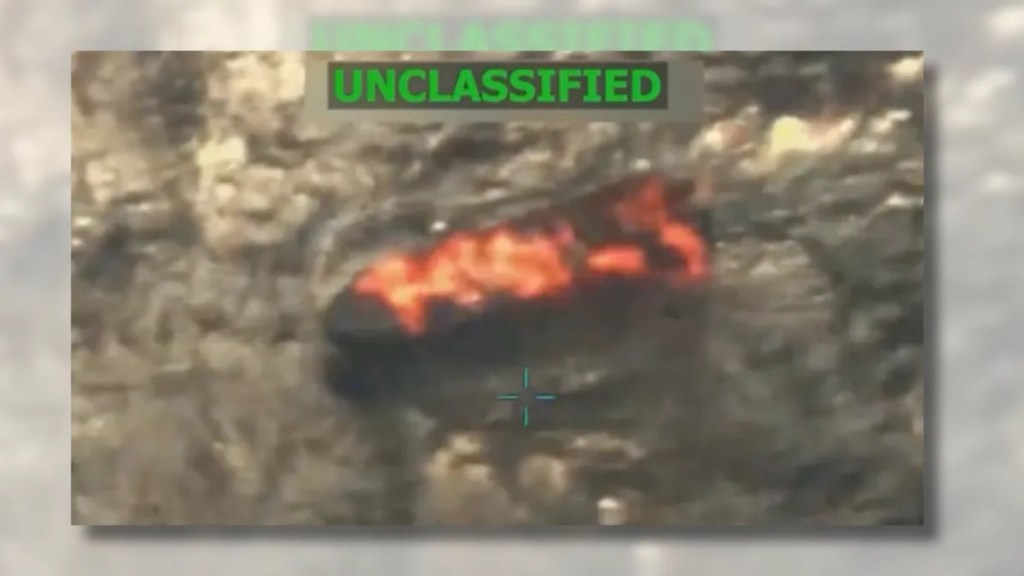
On September 1, 2025, in international waters off Venezuela’s coast, a U.S. military drone fired a Hellfire missile that could stop a tank, at a flimsy 39-foot speedboat, killing all 11 people aboard. What happened next was not an investigation, but a propaganda war.
It’s a place steeped in irony. In the turquoise waters off Venezuela, named because Lake Maracaibo locals built houses on stilts, Spanish explorers, Alonso de Ojeda and America Vespucci, were reminded of Venice, hence, in 1499, it was christened “Veneziola” or Little Venice.
Densely forested mountains plunge down to mangrove-tangled shores where the sun-beaten, restless, southern Caribbean enters the open Atlantic through passages Genoan gold-digger, Columbus’, terrified Spanish sailors named the Dragons’ Mouths and the Serpent’s Mouth.
The terror is not so new, The Caribbean has long been a theater of imperial violence; from Columbus’s terror in Hispaniola to drone strikes off the Venezuelan coast. Columbus would hang insubordinate sailors, mutilate slow workers, but his own calculations on his first voyage were not so hot. Had he not run into the Americas, he would have starved. His next landfall would not be until Japan. His brutality and incompetence are echoed in US War Dept’s Pete Hegseth and Donald Trump.
Columbus’ first voyage was an Elon Musk, “the Math doesn’t work dude,” meets Mad Max, “get to Japan or die trying” mission – but Christopher got incredibly lucky that the Americas were in the way at exactly the distance he (wrongly) thought Japan would be!
In 1498, Columbus, again, explored these same Venezuelan waters on his third voyage; one that would end with his arrest and disgrace. He was clapped in irons. Extradited back to Spain. His gold was confiscated. Five centuries later, the Caribbean remains a theater where empire asserts its will through violence.
It is here that the Trump administration is writing a dark new chapter in American foreign policy. It is a story told with missile strikes and snuff films posted on social media; a performative, gratuitously cruel and sadistic abuse of military power that has left at least 17 people dead.
Columbus didn’t name Paria; he learned the name from the indigenous people who lived there. The peninsula and gulf retain that name today. This double meaning becomes even more powerful: the indigenous people’s own name for their homeland happened to match the Spanish word for “outcast” or “pariah” – a bitter linguistic coincidence given how the Spanish would treat them, and given how their descendants in these coastal villages would be treated centuries later by US Gringos missile strikes.
The irony is accidental and profound.
When Columbus first reached Venezuela in August 1498, stepping onto its shores in the thick tropical heat as the mighty Orinoco poured its freshwater bounty into the Caribbean, he believed he had found the Garden of Eden itself; the earthly paradise where the stalk of the pear-shaped world reached nearest to Heaven. The Genoese navigator, a gold-digging martinet who had sailed west to find riches, stood on a land of impossible abundance: vast rivers, fertile coasts, and beneath the soil, reserves of oil that would one day dwarf nearly every other nation’s.
Yet five centuries later, this same paradise has become one of the world’s most desperate places, its people fleeing by the millions from hyperinflation, starvation, and authoritarian collapse; a nation so broken that some might cruelly dismiss it among the world’s most troubled countries, to use contemporary parlance.
The bitter irony would have tickled Cervantes pink: Columbus came seeking gold and found a continent; Venezuela possesses the world’s largest oil reserves yet cannot feed its people. What the navigator thought might be Eden has become, through corruption and misrule, a place where hospitals lack medicine, children go hungry, and over seven million souls have fled their homeland.
From the hot August night when a sick, brutal admiral first set foot on South American soil believing he’d touched paradise, to today’s crisis where that same land’s riches curse rather than bless it, Venezuela’s arc is one of history’s cruelest transformations, a fall from imagined grace that Columbus, for all his flaws and delusions, could never have foreseen. The event bears a closer look.
On September 1st, somewhere in the warm waters between Trinidad’s green northern heights and the Venezuelan coast; where coconut palms lean over white sand beaches, where the trade winds carry the salt tang of the sea through mangrove thickets, and where generations of fishermen have risked their lives; a U.S. Navy destroyer or MQ-9 Reaper drone fires at least one 50KG Hellfire missile, torching a wooden peñero and its crew in a flash.
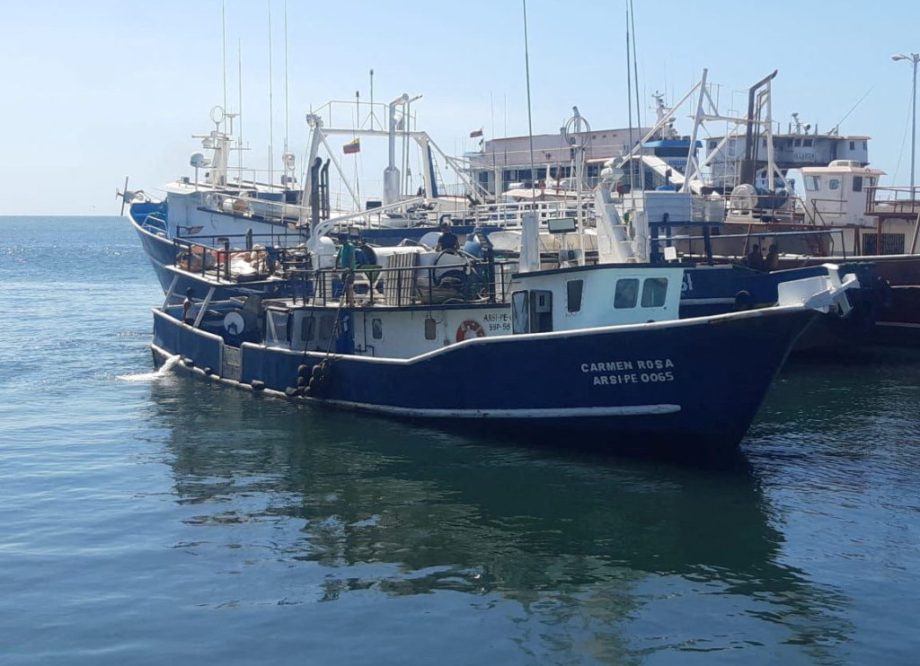
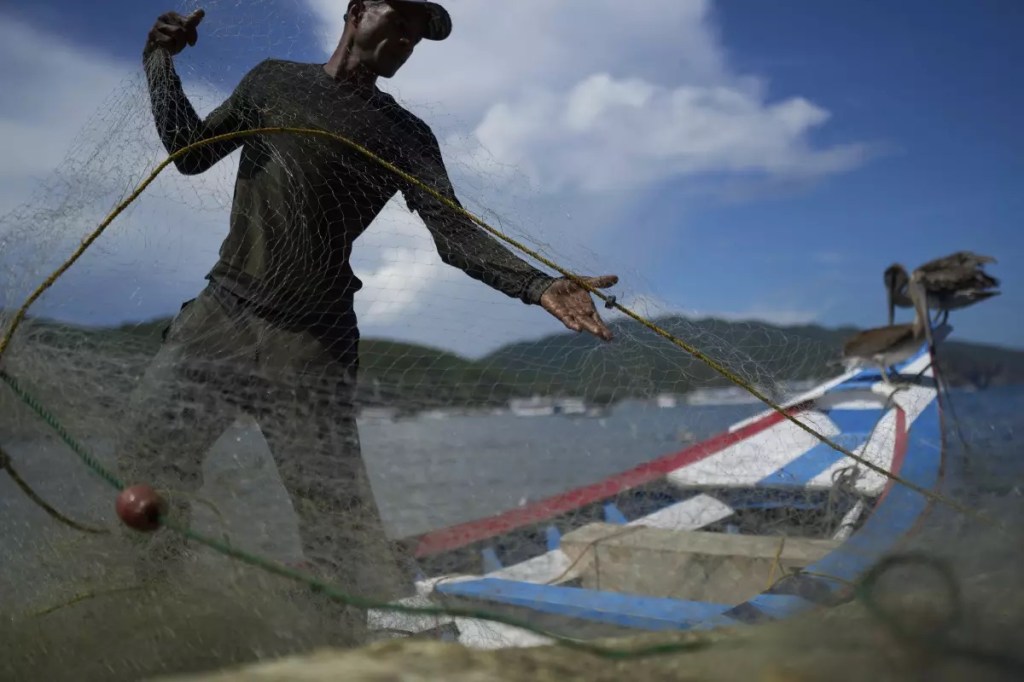
Peñero are the traditional boats of Venezuela’s coast: hand-hewn from mahogany or cedar planks, flat-bottomed with pointed bows and square sterns, perhaps twelve metres long. The kind of craft fishermen repair themselves on beaches at Guaca and El Morro de Puerto Santo, their hulls weathered to silver-gray by sun and salt, timbers bent and fitted by hand, held together with skill passed down from father to son. The missile’s impact is captured on video: a streak across the blue, then an orange flame engulfs the vessel, incinerating eleven men in seconds.
The mahogany that had resisted Caribbean storms for years ignites like kindling. It’s a turn-on for Trump who posts the footage on social media; a victory against “narco-terrorists.” Yet the Trump administration provides no evidence that those poor souls put to the blow-torch were anything more than fishermen from impoverished coastal villages; parias in every sense, outcasts from Venezuela’s collapsed economy;where a month’s income from sardine fishing no longer covers a week of groceries.
The disproportion is staggering. Against wooden boats built by hand, the kind that “could never make the journey all the way up the Caribbean to the United States”; craft that would not look out of place in a nineteenth-century harbour; the United States deployed guided-missile destroyers, a nuclear-powered submarine, an amphibious assault group carrying 2,500 Marines, and helicopter gunships. Against peñeros whose outboard motors cost less than an American family spends on groceries in a month, vessels piloted by men who earn perhaps $100 monthly catching sardines, the U.S. military unleashed the arsenal of modern warfare: precision Hellfire missiles designed for naval combat, fired from vessels bristling with weapons systems worth hundreds of millions of dollars.
No warning shots. No attempt at interdiction. Just execution from the sky, leaving nothing but burning wreckage and splintered mahogany on waters that turned from turquoise to black with smoke and diesel.
This is not a war on drugs. This is a series of extrajudicial killings, an outrageous violation of international law, and a dangerous assertion that the president can secretly wage war on his sole authority. It is time for the US to abandon this violent authoritarianism and re-engage with its neighbours with a little less duplicity, a tad less overweening arrogance and a lot more humanity.
The Trump kakistocracy’s entire justification for these strikes is a farrago of falsehoods and legal fictions. The central claim, that Venezuela poses a major drug threat to the US, is an outright lie. According to the US Drug Enforcement Administration, 84 per cent of cocaine seized in the US originates from Colombia; Venezuela is not even mentioned. The UN Office on Drugs and Crime concurs, noting the main cocaine routes to the US run through other countries. Venezuela ranks sixth in the region for cocaine seizures, accounting for less than two per cent of the total.
Even if we were to accept the administration’s absurd allegations, the actions are still illegal. Under international human rights law, which applies outside of armed conflict, lethal force is only permissible when strictly unavoidable to protect against an imminent threat of death. There was no such threat here. In fact, national security sources admitted the first small fishing boat, or “peñero”, was turning back to shore when it was struck. These were not acts of war; they were gratuitous, unlawful killings. As legal experts have made clear, even if the men were drug smugglers, they are considered civilians under the law of war. Intentionally targeting them is a potential war crime.
The Trump regime’s flagrant disregard for law is matched only by a callous contempt for human life. When confronted with the charge of war crimes, VP JD Vance’s statesmanly response was, “I don’t give a shit what you call it”. It is a sentiment that Republican Senator Rand Paul rightly called “despicable and thoughtless”. He may also have added “dangerous”.
The administration cancelled classified briefings to Congress, and Pentagon officials were reportedly scrambling for a legal justification after the first attack had already killed 11 people. This is not policy; it is impunity masquerading as a strategy.
The grim reality is that these strikes have little to do with narcotics and everything to do with a long-standing “regime change” agenda against the government of Nicolás Maduro. An anonymous source familiar with the planning tells journalists the goal is to pressure Maduro into a rash decision that could lead to his ouster. It is gunboat diplomacy for the 21st century.
This military aggression is the sharp end of a policy that includes years of crippling U.S. sanctions, which have devastated Venezuela’s economy and created the desperate conditions that drive people to illicit activities in the first place. In the fishing communities where the victims lived, incomes can be less than $100 a month, not even enough for a week’s groceries. This economic warfare creates the victims that American military power then executes without trial.
There is a better path. A strategy for the Caribbean Basin should not be based on unilateral force and anachronistic notions of a “continental backyard”. Instead, it should be founded on building blocks of mutual respect and partnership. Forging a “collective hegemony,” where Basin governments work as sovereign equals with the United States, would better advance the shared interests of all nations. This means respecting local concepts of sovereignty, engaging in dialogue, and focusing on economic partnership, not military punishment. It is an approach that acknowledges the legitimacy of Latin American nationalism and its desire for independence from U.S. domination.
Killing people in international waters, refusing to provide evidence, and joking about it at rallies is not a sign of strength; it is a confession of moral and strategic bankruptcy. The United States must end these unlawful strikes immediately and submit to a transparent investigation. It is time to replace the logic of Gaza in the Caribbean with a return to the rule of law and the basic principles of decency, humanity and altruism, not to mention honesty and fair-dealing. America’s neighbourhood deserves.
 Urban Wronski Writes
Ah yes, the triple H trifecta! Just what the USA needs right now.
Thanks for the heads up, David.
LikeLiked by 1 person